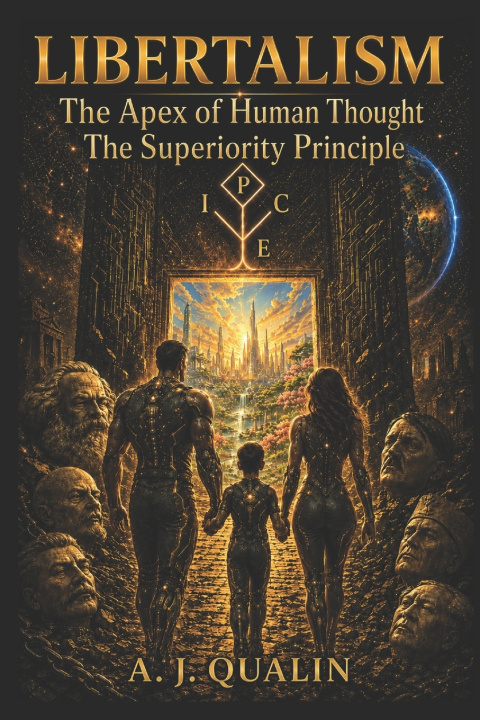
Libertalism begins at the door that opened too late.
A patient can die with rights on paper. A citizen can win an appeal after the house is gone. A student can receive the correction after the year is lost. A worker can be restored to a platform after the income has collapsed. The institution may apologize. The loss remains.
For centuries, ideologies argued over liberty, equality, property, class, nation, markets, order, progress, and dignity. They built parties, revolutions, constitutions, bureaucracies, and myths. Yet the human being kept standing before the same threshold: a form, a queue, a locked file, a delayed appeal, a reason delivered after obedience had already been forced.
The missing subject was time.
A day has 86,400 seconds. A year has 31,536,000. Every institution that delays access spends part of someone's life. It may call the delay review, procedure, processing, compliance, or capacity. The person experiences it as something simpler: the hour that never came back.
Libertalism treats that hour as political evidence.
Its rule is hard: freedom is true only when it arrives in time. A right matters only if the person can use it before the window closes. Medical approval after biological decline, appeal after irreversible damage, explanation after constraint, and exit that destroys the person during passage are not freedom. They are remains.
The doctrine is built on the Qualin Mechanism: Interface, Portability, Appeal Path, and Explanation in Time.
Interface means the person can enter without maze or humiliation. Portability means identity, records, consent, rights, work, reputation, and continuity travel with the person. Appeal Path means error can still be stopped. Explanation in Time means the reason arrives before denial, sanction, classification, treatment, exclusion, or forced compliance.
When these four fail, the right decays. It may survive in law. It has stopped protecting life.
Technology makes the failure sharper. A platform can suspend a livelihood in seconds and review the ruin in weeks. A state can digitize services and keep the old labyrinth behind a brighter screen. A hospital can own advanced machines and still lose patients at intake. Abundance exists, then stalls at the threshold.
Libertalism calls this Captive Abundance: capacity trapped behind broken access.
The task is to turn it into Executable Freedom. This is TAL: Technology → Abundance → Liberties. Technology creates capacity. Qualin decides whether that capacity reaches the person in time. When it does, prosperity becomes time saved, damage prevented, continuity preserved, and dignity kept alive before the wound forms.
Liberalism defended the individual, then left him before slow institutions. Socialism saw exclusion, then built corridors of dependency. Conservatism protected inheritance, then guarded closed doors. Libertarianism praised exit, then forgot survival during passage. Techno-optimism worshiped "more." Libertalism asks the harder questions: when does it arrive, who can use it, what breaks on the way, and where is the appeal before harm becomes permanent?
That test is The Superiority Principle.
The book moves from politics to matter, life, mind, artificial intelligence, longevity, quantum computing, space exploration, and the permanence of consciousness. From quarks to neurons, from institutions to future bodies, the same demand returns: passage must preserve the person.
Libertalism is a doctrine of doors, clocks, bodies, records, appeals, machines, and irreversible moments. It is written for a century in which intelligence moves at machine speed while human beings are made to wait like subjects before a counter.
The old age declared rights. Libertalism asks whether they arrived in time.