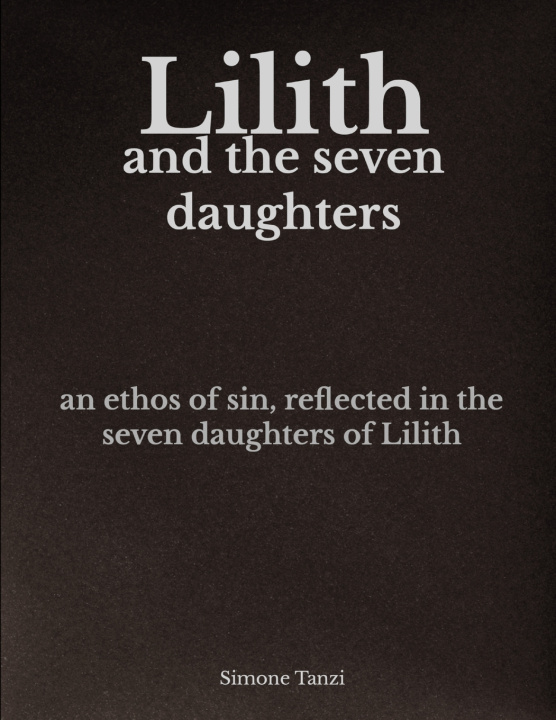
Lilith and the Seven Daughters examines the figure of Lilith through mythology, demonology, religious history, and personal interpretation. Drawing from Jewish folklore, Kabbalistic literature, occult traditions, and modern esoteric writings, the book explores Lilith not simply as a demonized figure, but as a symbol of rebellion, autonomy, transgression, and self-definition.
Central to the work is an examination of seven figures associated with Lilith across fragmentary traditions: Igrat, Mahalath, Naamah, Nega, Lilidtha, Maskit, and Asirta. Through comparison of competing sources, genealogies, and symbolic patterns, the book proposes a framework linking these figures to the Seven Deadly Sins.
Rather than presenting a fixed doctrine, the work openly examines the contradictions, ambiguities, and gaps surrounding these traditions. Historical sources, theological criticism, and personal synthesis are treated side by side, with clear distinction between documented lore and speculative interpretation.
The result is a work that moves between historical inquiry, symbolic analysis, and personal philosophy, approaching Lilith and her associated figures as evolving symbols shaped by theology, folklore, rebellion, and the ongoing act of reinterpretation.