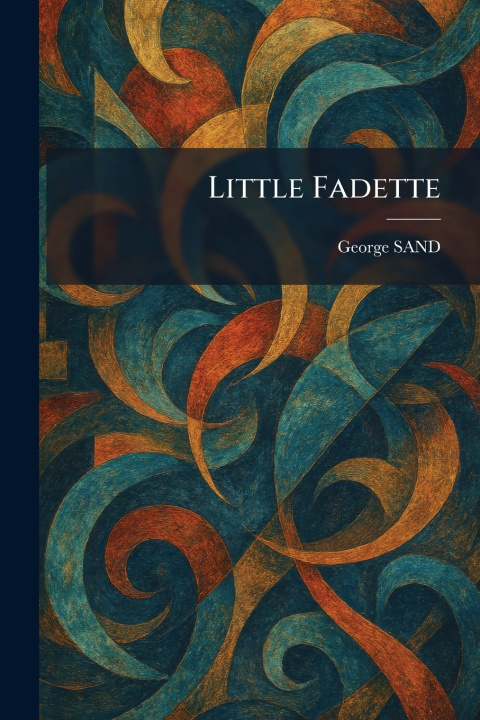
"Little Fadette" is a masterpiece of George Sand's pastoral fiction, offering an evocative and poignant look at rural life in 19th-century France. The narrative centers on the twin brothers Landry and Sylvinet Barbeau, whose inseparable bond is challenged as they navigate the complexities of adulthood. Their lives are forever changed by Fanchon Fadet, a young girl known as "Little Fadette," who is initially shunned by her village as a wild and eccentric outcast.
As Landry discovers the true nature beneath Fadette's rough exterior, the novel unfolds into a touching exploration of social prejudice, inner beauty, and the transformative power of love. George Sand expertly weaves elements of local folklore and vivid descriptions of the natural world into a story that addresses the psychological depth of sibling rivalry and the strength of the female spirit. "Little Fadette" stands as a significant work in the "rustic novel" genre, celebrated for its lyrical prose and its empathetic portrayal of a heroine who triumphs over societal judgment through her intelligence and kindness.
This work has been selected by scholars as being culturally important, and is part of the knowledge base of civilization as we know it. This work was reproduced from the original artifact, and remains as true to the original work as possible. Therefore, you may see the original copyright references, library stamps (as most of these works have been housed in our most important libraries around the world), and other notations in the work.
This work is in the public domain in the United States of America, and possibly other nations. Within the United States, you may freely copy and distribute this work, as no entity (individual or corporate) has a copyright on the body of the work.
As a reproduction of a historical artifact, this work may contain missing or blurred pages, poor pictures, errant marks, etc. Scholars believe, and we concur, that this work is important enough to be preserved, reproduced, and made generally available to the public. We appreciate your support of the preservation process, and thank you for being an important part of keeping this knowledge alive and relevant.