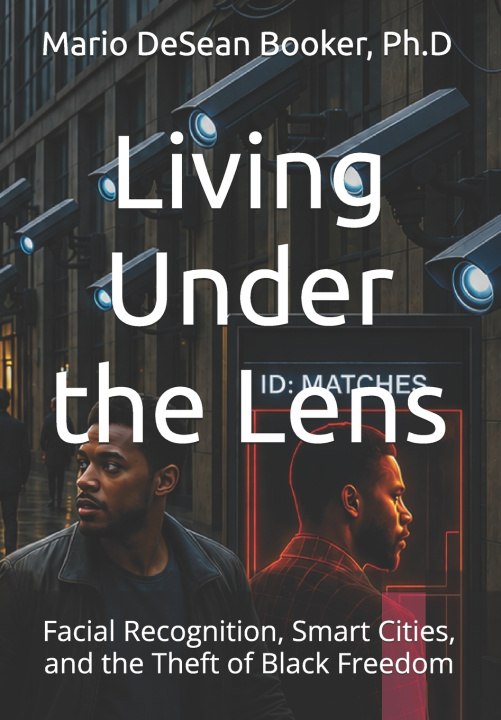
Living Under the Lens: Facial Recognition, Smart Cities, and the Theft of Black Freedom
Mario DeSean Booker, Ph.D.
Robert Williams was arrested in his driveway. The computer got it wrong. Nijeer Parks spent ten days in jail. Porcha Woodruff was eight months pregnant when police came for her. These are not isolated system errors. They are predictable outcomes of surveillance infrastructure built to do exactly what it does.
Living Under the Lens examines how facial recognition, predictive policing algorithms, acoustic sensors, and smart city data integration function as instruments of racialized social control. Facial recognition systems misidentify Black faces at rates up to 1,878 times higher than white faces. Black neighborhoods carry the densest camera networks. The wrongful arrests are disproportionately of Black people. This follows the evidence-from South Carolina's 1704 slave patrols to the 2026 federal lawsuit in which xAI argued that requiring developers to measure algorithmic discrimination violates the First Amendment.
The book introduces deferred reliance-the gap between law enforcement rhetoric framing facial recognition as an investigative lead and documented practice in which algorithmic matches drive arrests without independent corroboration. That gap is where wrongful convictions live.
Beyond the arrests: surveillance changes how people move through public space, who they trust, whether they participate in civic life. Hypervigilance levels exceeding PTSD thresholds. Children flagged as high-risk before any crime. Mutual aid networks monitored as threats. The psychological and social destruction is documented here alongside the technology itself.
And the resistance: cities that banned facial recognition and won. Communities that abolished predictive policing. Organizers who mapped sensors, filed public records requests, and forced transparency. Lawyers who won federal settlements. People who claimed joy in watched spaces because refusing surveillance was the point.
The system wasn't built to be reformed. It was built for racial control. This book shows what dismantling it-and building something different-actually requires.
For scholars, organizers, lawyers, and everyone living under the lens right now.