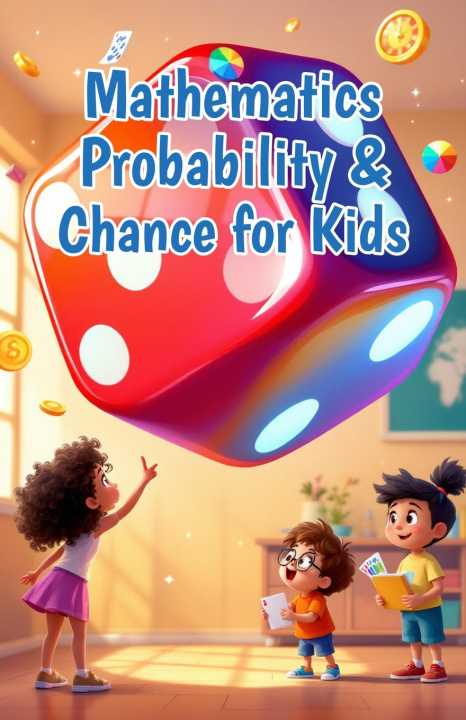
Give your child the confidence to understand chance, predict outcomes, and think like a mathematician - starting from page one.
Probability is one of the most useful math skills a child can learn, yet most books either talk down to young readers or jump ahead too fast. This step-by-step guide is written specifically for children aged 6-10, building understanding one clear idea at a time - from first questions about chance all the way to real-life applications.
Inside, your child will discover:
- What probability means and how we measure it in everyday life
- How to run simple experiments and record what happens
- The difference between expected results and actual results
- How to list outcomes and build sample spaces with confidence
- What combined events are and how to think through them step by step
- How to play probability games that make learning feel like fun
- Common misconceptions about luck and chance - and the truth behind them
- Where probability shows up in the real world, from weather forecasts to card games
Who this guide is for:This guide is written for parents, caregivers, and educators supporting children in Grades 1 through 4 who are ready for a structured, readable introduction to probability. It works equally well as a read-together resource at home, a classroom supplement, or a self-paced independent reader for curious, confident young learners. Homeschooling families will find the chapter-by-chapter structure easy to slot into an existing math curriculum.
No confusing symbols. No overwhelming notation. Just clear language, relatable examples, and a logical progression that builds real understanding from the ground up.
Scroll up and add it to your cart today - and give your child a head start on one of the most practical areas of mathematics.