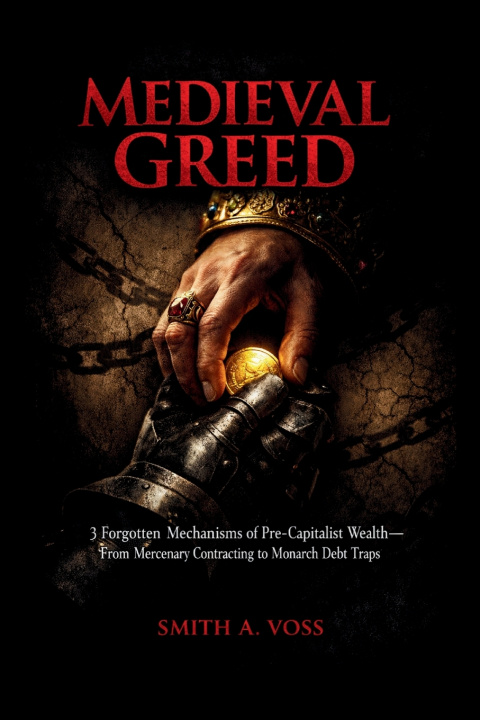
What if the darkest tactics of medieval power could sharpen your modern business instincts?
Before spreadsheets and lawyers, mercenaries and monarchs engineered the first global economy. Their forgotten playbook still works.
You've read history as dates and dynasties. But beneath the armor lies a raw economic strategy-one that modern education has buried under compliance layers. The truth? No new leverage models have been invented since the 13th century. Only the costumes have changed.
Medieval Greed is not a dry timeline. It is a strategic field manual. It strips away academic noise and delivers three battle-tested mechanisms: risk pricing without courts, lending to the powerful without getting crushed, and building closed networks that outlast empires. Each chapter offers high-probability patterns you can adapt-not guarantees, but proven logic from centuries of trial and error.
Inside this digital archive, you will discover:
The "Murder Margin": How a 14th‑century captain's performance bonus evolved into a negotiation tool you can use this week.
The Lombard Playbook: Lend to powerful counterparts and collateralize something they cannot afford to lose-without a lawsuit.
The Hanseatic Exclusion Clause: Build a network, control a bottleneck, and make outsiders pay double. The original platform moat.
Edward III's default of 1345: Why the richest banks collapsed-and the one question that would have saved them (still relevant for startups).
Jacques Coeur's fall: The only risk you cannot fully hedge-and how to spread exposure across jurisdictions.
Bonus - The Digital Archive: Includes a printable "Monarch Debt Trap Spotting Cheat Sheet" with five warning signs, three escape questions, and a 15‑minute risk audit. No hype. Just tools.
You do not need a law degree or a finance PhD. You need the clarity to see greed as a mechanism-not a sin. Read this book before your competitor does. Then deploy the same three patterns that built the first global economy. ```