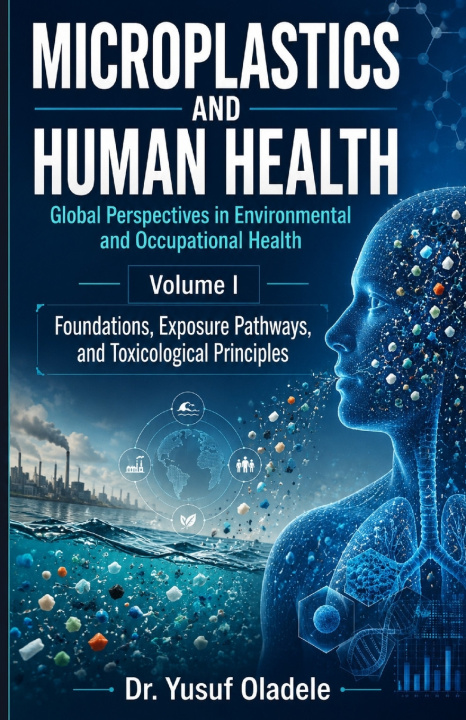
Microplastics have become one of the most rapidly developing concerns in environmental and human health science. These microscopic plastic particles are now reported across oceans, rivers, soils, atmospheric air, food, drinking water and selected human biological samples. Yet their presence alone does not establish disease, and important questions remain concerning exposure, biological uptake, toxicity and long-term health significance.
Microplastics and Human Health: Global Perspectives in Environmental and Occupational Health - Volume I: Foundations, Exposure Pathways, and Toxicological Principles provides a structured, evidence-based introduction to this complex and evolving field.
Beginning with the science of plastics and polymer materials, the book explains how microplastics and nanoplastics are formed, classified, transported and transformed in the environment. It examines their movement through aquatic, terrestrial and atmospheric systems before exploring the principal pathways through which humans may be exposed, including ingestion, inhalation, occupational contact and selected consumer and medical contexts.
The volume then develops the toxicological foundations needed to interpret emerging health research. Topics include particle uptake and distribution, oxidative stress, inflammation, immune responses, cellular injury, genotoxicity, endocrine-related mechanisms and the influence of particle size, shape, polymer composition, environmental ageing and associated chemicals.
Throughout the book, particular attention is given to the distinction between environmental detection, human exposure, biological interaction and demonstrated adverse health effects. Experimental findings are considered alongside their methodological limitations, helping readers distinguish established evidence from emerging associations and unresolved scientific questions.
This volume covers:
• Plastic materials, polymer characteristics and microplastic formation
• Primary and secondary microplastics and nanoplastics
• Environmental sources, pathways and global distribution
• Weathering, fragmentation, transport, deposition and environmental fate
• Food, water and inhalation exposure pathways
• Occupational and consumer exposure considerations
• Detection of microplastics in human biological samples
• Cellular uptake and particle-tissue interactions
• Oxidative stress, inflammation and immune responses
• Toxicological mechanisms and dose considerations
• Analytical limitations and challenges in interpreting current evidence
• Research uncertainties and priorities for future investigation
Written for environmental and occupational health professionals, toxicologists, researchers, healthcare practitioners, occupational hygienists, engineers, regulators, sustainability professionals, policymakers and students, the book provides an interdisciplinary foundation for understanding an issue that increasingly connects environmental pollution with human health.
Rather than promoting either alarm or complacency, Microplastics and Human Health encourages scientifically responsible interpretation, proportionate prevention and evidence-based decision-making.
Volume I establishes the scientific foundation for the series. Volume II examines organ-system effects and clinical implications, while Volume III addresses risk assessment, occupational health, public policy and future directions.