Könyv Middle Class Without Democracy Chen

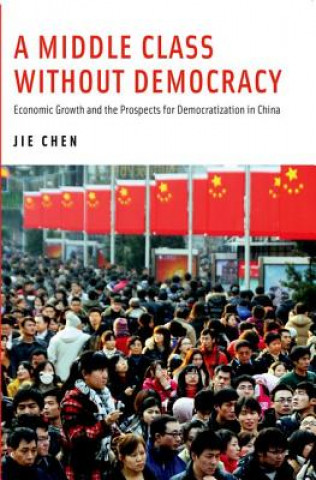
Middle Class Without Democracy

Nyelv: Angol
Kötés: Puha kötésű
Elérhetőség: Beszállítói készleten
Küldés 10-18 napon belül
15 948 Ft
What kind of role can the middle class play in potential democratization in such an undemocratic, la...


Információk a könyvről

Nyelv
Angol
Kötés
Könyv - Puha kötésű
Kiadva
2014
oldal
240
EAN
9780199385614
ISBN
0199385610
Enbook ID
02557999
Súly
356
Méretek
235 x 157 x 15

Teljes leírás

What kind of role can the middle class play in potential democratization in such an undemocratic, late developing country as China? To answer this profound political as well as theoretical question, Jie Chen explores attitudinal and behavioral orientation of China's new middle class to democracy and democratization. Chen's work is based on a unique set of data collected from a probability-sample survey and in-depth interviews of residents in three major Chinese cities, Beijing, Chengdu and Xi'an-each of which represents a distinct level of economic development in urban China-in 2007 and 2008. The empirical findings derived from this data set confirm that (1) compared to other social classes, particularly lower classes, the new Chinese middle class-especially those employed in the state apparatus-tends to be more supportive of the current Party-state but less supportive of democratic values and institutions; (2) the new middle class's attitudes toward democracy may be accounted for by this class's close ideational and institutional ties with the state, and its perceived socioeconomic wellbeing, among other factors; (3) the lack of support for democracy among the middle class tends to cause this social class to act in favor of the current state but in opposition to democratic changes. The most important political implication is that while China's middle class is not likely to serve as the harbinger of democracy now, its current attitudes toward democracy may change in the future. Such a crucial shift in the middle class's orientation toward democracy can take place, especially when its dependence on the Party-state decreases and perception of its own social and economic statuses turns pessimistic. The key theoretical implication from the findings suggests that the attitudinal and behavioral orientations of the middle class-as a whole and as a part-toward democratic change in late developing countries are contingent upon its with the incumbent state and its perceived social/economic wellbeing, and the middle class's support for democracy in these countries is far from inevitable.

Érdekelheti

Collected Papers

Alfred Tarski
84 786 Ft
6 545 Ft
3 848 Ft
3 848 Ft
3 690 Ft

Azok a vásárlók, akik ezt a könyvet megvásárolták, a következőket is megvásárolták

3 021 Ft

Kayip Cumhuriyet

Lawrence Lessig
9 750 Ft

OSM VIOLONCELLE

DAI FUJIKURA
12 600 Ft
6 585 Ft

Los Campos Elíseos

Pablo García Baena
4 661 Ft

Spiel mit Prasenz

Stefan Loibner
16 151 Ft