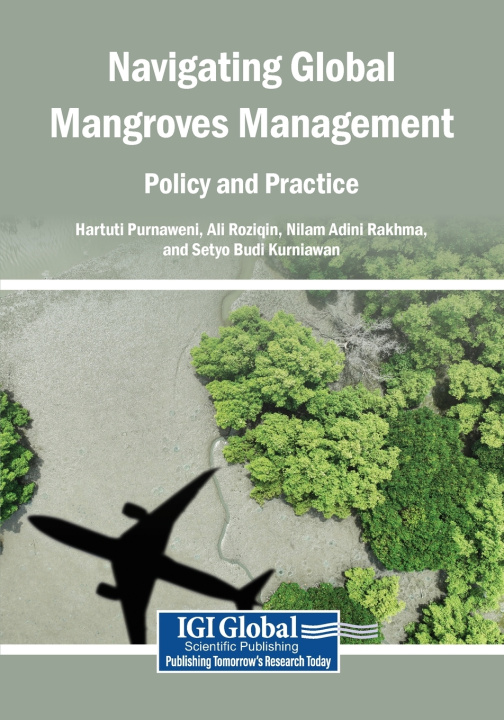
Mangroves are among the most vital coastal ecosystems, providing a wide range of ecological, social, and economic benefits. They act as natural buffers against coastal erosion and storm surges, function as highly efficient carbon sinks, and serve as breeding grounds that sustain marine biodiversity. Beyond their ecological role, mangroves are integral to community livelihoods, supporting fisheries, eco-tourism, and the broader blue economy. Despite this importance, mangroves face escalating threats from unsustainable coastal development, aquaculture expansion, deforestation, and climate change. While policy frameworks for mangrove conservation and restoration have emerged globally, significant challenges remain in achieving coherence across governance levels, integrating community voices, and balancing conservation priorities with economic imperatives. Navigating Global Mangroves Management: Policy and Practice navigates the complexities of global mangrove management, highlighting the interplay between policy, governance, and practice. Drawing on interdisciplinary insights and case studies from diverse regions, this book offers a comprehensive understanding of current challenges and potential solutions for sustaining mangroves for future generations. Covering topics such as earth observation, forest area enforcement, and rising sea levels, this book is a fundamental academic resource for graduate and doctoral students, Conservation practitioners, Fisheries, eco-tourism professionals, carbon market professionals, policymakers, and more.