Könyv Objectivity Daston

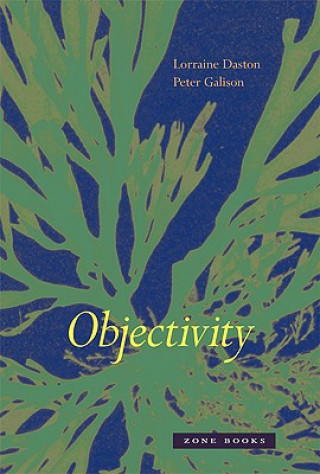
Objectivity

Szerző: Daston
Nyelv: Angol
Kötés: Puha kötésű
Kiadó: Zone Books
Elérhetőség: Beszállítói készleten
Küldés 3-5 napon belül
13 508 Ft
Objectivity has a history, and it is full of surprises. In Objectivity, Lorraine Daston and Peter Ga...
Információk a könyvről

Szerző
Nyelv
Angol
Kötés
Könyv - Puha kötésű
Kiadva
2010
oldal
504
EAN
9781890951795
ISBN
189095179X
Enbook ID
04406103
Kiadó
Súly
970
Méretek
154 x 228 x 43

Teljes leírás

Objectivity has a history, and it is full of surprises. In Objectivity, Lorraine Daston and Peter Galison chart the emergence of objectivity in the mid-nineteenth-century sciences--and show how the concept differs from its alternatives, truth-to-nature and trained judgment. This is a story of lofty epistemic ideals fused with workaday practices in the making of scientific images. From the eighteenth through the early twenty-first centuries, the images that reveal the deepest commitments of the empirical sciences--from anatomy to crystallography--are those featured in scientific atlases, the compendia that teach practitioners what is worth looking at and how to look at it. Galison and Daston use atlas images to uncover a hidden history of scientific objectivity and its rivals. Whether an atlas maker idealizes an image to capture the essentials in the name of truth-to-nature or refuses to erase even the most incidental detail in the name of objectivity or highlights patterns in the name of trained judgment is a decision enforced by an ethos as well as by an epistemology. As Daston and Galison argue, atlases shape the subjects as well as the objects of science. To pursue objectivity--or truth-to-nature or trained judgment--is simultaneously to cultivate a distinctive scientific self wherein knowing and knower converge. Moreover, the very point at which they visibly converge is in the very act of seeing not as a separate individual but as a member of a particular scientific community. Embedded in the atlas image, therefore, are the traces of consequential choices about knowledge, persona, and collective sight. Objectivity is a book addressed to anyone interested in the elusive and crucial notion of objectivity-- and in what it means to peer into the world scientifically. Lorraine Daston is Director at the Max Planck Institute for the History of Science in Berlin, Germany. She is the coauthor of Wonders and the Order of Nature, 1150-1750 and the editor of Things That Talk: Object Lessons from Art and Science (both Zone Books). Peter Galison is Pellegrino University Professor of the History of Science and of Physics at Harvard University. He is the author of Einstein's Clocks, Poincar's Maps: Empires of Time, How Experiments End, and Image and Logic: A Material Culture of Microphysics, and other books, and coeditor (with Emily Thompson) of The Architecture of Science (MIT Press, 1999).

Érdekelheti

Things that Talk

Lorraine Daston
9 980 Ft
9 980 Ft

Confidence-man

Herman Melville
4 237 Ft
14 530 Ft

Invention of Athens

Nicole Loraux
13 351 Ft

Cradle of Humanity

Georges Bataille
9 980 Ft
13 351 Ft

Theory of Religion

Georges Bataille
8 742 Ft
13 037 Ft

Behave

Robert M. Sapolsky
5 972 Ft

Forty Signs of Rain

Kim Stanley Robinson
4 846 Ft
33 252 Ft

South

Ernest Shackleton
7 052 Ft
29 598 Ft

The Art of Ghost of Tsushima

Sucker Punch Productions
13 248 Ft

Vagabond

Bernard Cornwell
3 968 Ft

Azok a vásárlók, akik ezt a könyvet megvásárolták, a következőket is megvásárolták

8 671 Ft

Addiction by Design

Natasha Dow Schull
12 495 Ft

Tyranny of Merit

Michael J. Sandel
4 151 Ft

Chaos

James Gleick
5 187 Ft
8 742 Ft
15 821 Ft
4 707 Ft
11 786 Ft

Neganthropocene

Bernard Stiegler
11 047 Ft

Network Culture

Tiziana Terranova
14 544 Ft
5 416 Ft

Leviathan

Thomas Hobbes
4 308 Ft

State of Exception

Giorgio Agamben
10 137 Ft