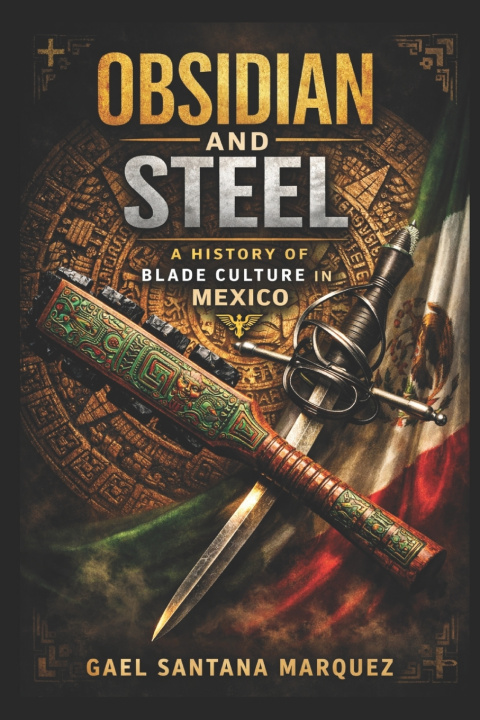
Obsidian and Steel: A History of Blade Culture in Mexico
From Obsidian to Steel: A Historical Overview of Edged Weapons in Mexican Culture traces the long evolution of bladed weapons across Mexico's history, from the volcanic obsidian tools of Mesoamerican civilizations to the steel swords and knives introduced during the Spanish conquest and the complex frontier weapon cultures that followed. It examines how weapons such as the macuahuitl and later European blades were not only instruments of war but also objects shaped by religion, status, and social order. Through archaeology, colonial chronicles, and historical analysis, the book reconstructs how edged weapons reflected shifting systems of power across centuries of conflict and cultural transformation.
The book follows this evolution into the colonial and post conquest periods, where Spanish steel swords, rapiers, and daggers entered New Spain and blended unevenly with Indigenous and mestizo martial realities. It explores how fencing traditions, honor culture, frontier violence, and informal combat practices shaped the use of blades in daily life. From dueling conventions to smuggling routes and rural conflicts, edged weapons remained deeply embedded in social identity, survival strategies, and expressions of masculinity across colonial and borderland societies.
The study concludes by examining the persistence of blades in modern Mexican culture through revolution, folklore, cinema, and criminal history, while also addressing contemporary attempts to reconstruct or revive older martial traditions. By connecting ancient obsidian weaponry with Spanish conquistador swords and later machete and knife cultures, the book presents a continuous but fragmented history of edged weapons as both practical tools and powerful cultural symbols that helped shape Mexico's martial imagination.