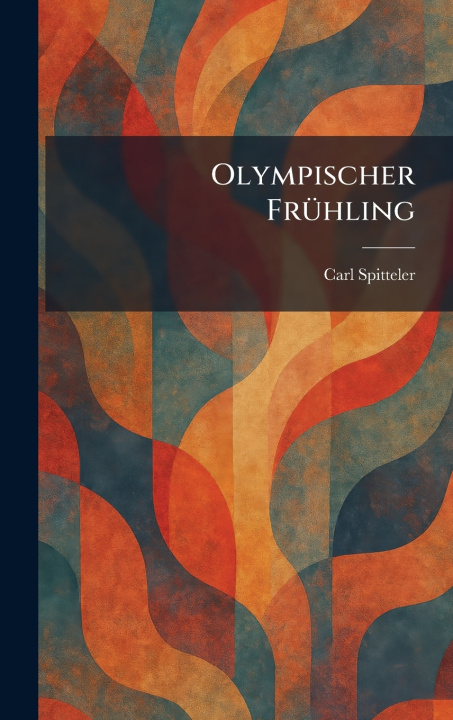
"Olympischer Frühling" ist das monumentale Hauptwerk des Schweizer Nobelpreisträgers Carl Spitteler. In diesem gewaltigen Vers-Epos entwirft der Autor eine völlig eigenständige mythologische Welt, in der die antiken Götter Griechenlands in eine moderne, allegorische Landschaft versetzt werden. Das Werk besticht durch seine sprachliche Kraft, seinen philosophischen Tiefgang und seine visionäre Bildsprache.
Die Handlung folgt dem Aufstieg der Götter zum Olymp und beschreibt ihre Begegnungen mit der Menschheit sowie die inneren Konflikte zwischen göttlicher Bestimmung und irdischem Schicksal. Spitteler verbindet klassische Motive mit einer zutiefst persönlichen Symbolik, die weit über eine bloÃe Nacherzählung antiker Mythen hinausgeht. "Olympischer Frühling" gilt als eines der bedeutendsten Beispiele der modernen Epik und war maÃgeblich für die Verleihung des Nobelpreises für Literatur an den Autor im Jahr 1919 verantwortlich.
Leser finden in diesem Werk eine faszinierende Mischung aus Humor, Tragik und kosmischer Phantasie. Es ist ein Meilenstein der deutschsprachigen Literatur, der die Grenzen zwischen Poesie und Philosophie verwischt und bis heute durch seine kühne Imagination beeindruckt.
This work has been selected by scholars as being culturally important, and is part of the knowledge base of civilization as we know it. This work was reproduced from the original artifact, and remains as true to the original work as possible. Therefore, you may see the original copyright references, library stamps (as most of these works have been housed in our most important libraries around the world), and other notations in the work.
This work is in the public domain in the United States of America, and possibly other nations. Within the United States, you may freely copy and distribute this work, as no entity (individual or corporate) has a copyright on the body of the work.
As a reproduction of a historical artifact, this work may contain missing or blurred pages, poor pictures, errant marks, etc. Scholars believe, and we concur, that this work is important enough to be preserved, reproduced, and made generally available to the public. We appreciate your support of the preservation process, and thank you for being an important part of keeping this knowledge alive and relevant.