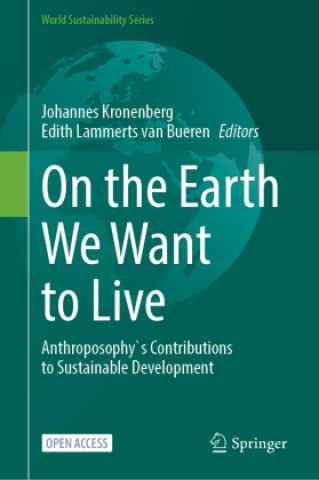
This open access book explores the contributions of anthroposophy to sustainable development, addressing a key research gap. It examines the anthroposophical worldview, providing an integral and holistic perspective on the relationship between humanity and the earth. By delving into its philosophical foundations, this book sheds light on how anthroposophy envisions sustainable human and environmental development.
A central focus is the resilience and impact of 28 pioneering organizations that apply anthroposophical principles in their work. These include multinational companies like Weleda, banks such as the Freie Gemeinschaftsbank Bank, and producers like Sonett, Voelkel and Stockmar. Organizations such as UNEPs Champion of the Earth 2024 Laureate SEKEM in Egypt, Monte Azul in Brazil, and Kufunda Learning Village in Zimbabwe are also featured, showcasing remarkable practices in sustainable development. Some of these institutions have been shaping the field for more than a century, serving as pioneers in their respective areas.
This book concludes by expanding the definition of sustainable development through the lens of anthroposophy, integrating both its principles and real-world applications. It is a valuable resource for sustainability practitioners, researchers, students, and educators looking to explore early and ongoing contributions to sustainable development, as well as best practices that can be integrated into academic curricula and professional practice.