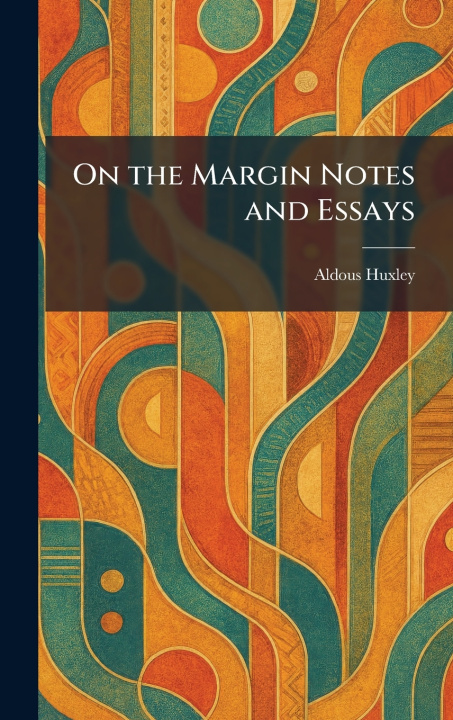
"On the Margin Notes and Essays" is a brilliant collection of intellectual ruminations by the acclaimed writer Aldous Huxley. Composed of various essays and reviews, this work offers a window into the mind of one of the 20th century's most profound thinkers as he navigates the cultural and literary landscape of the post-war era. Huxley's sharp wit and encyclopedic knowledge are on full display as he moves effortlessly between topics such as the art of poetry, the eccentricities of bibliophiles, and the nuances of social etiquette.
Through these pages, readers encounter a masterful blend of satire and serious inquiry. Whether analyzing the works of Chaucer or reflecting on the fleeting nature of modern fashion, Huxley provides a compelling critique of society and the arts. "On the Margin Notes and Essays" remains an essential volume for those interested in the development of modernism and the early intellectual trajectory of a novelist who would later define the dystopian genre. It is a testament to the enduring power of the essay as a medium for both personal expression and profound cultural commentary.
This work has been selected by scholars as being culturally important, and is part of the knowledge base of civilization as we know it. This work was reproduced from the original artifact, and remains as true to the original work as possible. Therefore, you may see the original copyright references, library stamps (as most of these works have been housed in our most important libraries around the world), and other notations in the work.
This work is in the public domain in the United States of America, and possibly other nations. Within the United States, you may freely copy and distribute this work, as no entity (individual or corporate) has a copyright on the body of the work.
As a reproduction of a historical artifact, this work may contain missing or blurred pages, poor pictures, errant marks, etc. Scholars believe, and we concur, that this work is important enough to be preserved, reproduced, and made generally available to the public. We appreciate your support of the preservation process, and thank you for being an important part of keeping this knowledge alive and relevant.