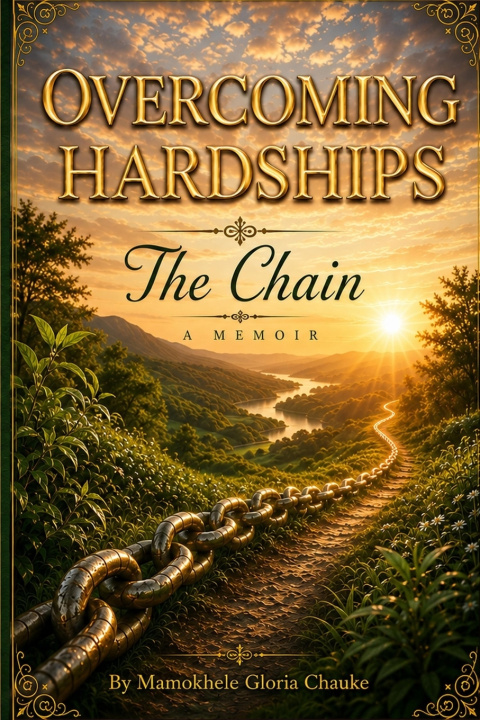
She wanted to break the chain. She didn't. She survived anyway.
Overcoming Hardships: The Chain is the true story of three generations of South African women who refused to give up - even when the world gave them every reason to stop.
The journey begins in Sophiatown, 1934, with the birth of the author's mother, Tshidi. Married three times, she endures abuse, betrayal, and the death of a child - all while fighting to keep her family alive. Her daughter, the narrator, grows up in the shadow of these failures. She watches her mother sleep on the floor of a windowless shack and vows to break the chain of divorce and suffering that has haunted her family for decades.
But patterns are patient. The narrator falls for a charming player who promises heaven and delivers silence. She falls again for a man who loves her but cannot stay. She survives eviction, hunger, and a near‑death experience on train tracks. She gives birth to a son, Karabo, who stops breathing as a toddler and is brought back to life by her sister's desperate CPR. Years later, Karabo describes heaven - a great‑grandmother, a glass of water, and a gentle voice telling him to return.
Miracles do not guarantee happy endings. The narrator's marriage ends in divorce - twice. Karabo turns to drugs. Her mother loses her mind again. And yet, the family survives - not triumphantly, but quietly.
One bright thread runs through the darkness: Winnie Madikizela Mandela, who without an appointment made tea, made calls, and helped the family find a home.
The memoir ends with a struggle that spans nearly two decades - the narrator's fight to lease municipal land to build low‑cost flats for women like her mother. She meets every requirement, pays every fee, and knocks on every door - from the mayor's office to the president's. Her application is rejected. The land remains empty. The chain is not only about love and marriage; it is also about land, broken promises, and women who persist even when the system refuses to move.
Overcoming Hardships: The Chain is a story of resilience, faith, and the quiet courage of women who refuse to lose. It is a South African story, but it is also a universal one - about the weight of inheritance and the slow, unglamorous work of staying alive.
For readers of The Glass Castle and Born a Crime, this memoir will remind you that sometimes survival is the greatest victory of all.