Why does one small country matter so much to the economic and strategic future of the Americas?
Stretching across one of the narrowest points between two oceans, Panama occupies a position of extraordinary strategic importance. Its geography connects the Atlantic and Pacific, while the Panama Canal links major markets, shipping routes, economies, and geopolitical interests around the world.
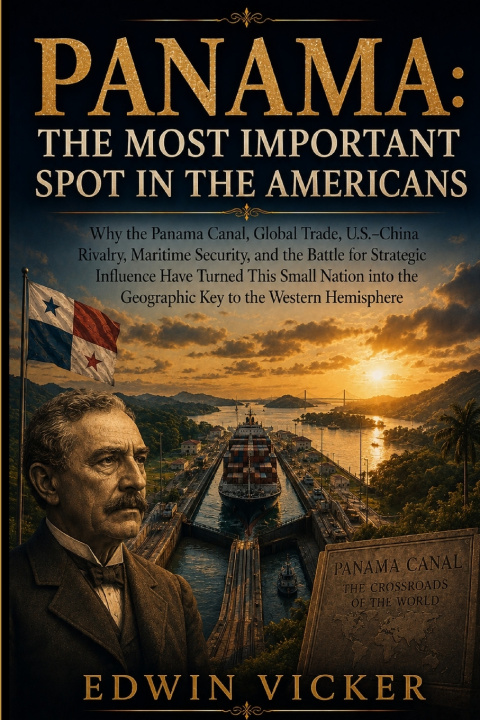
PANAMA: THE MOST IMPORTANT SPOT IN THE AMERICAS explores why this relatively small Central American nation has become one of the most consequential locations in the Western Hemisphere-and why its importance extends far beyond the canal itself.
From the construction and history of the Panama Canal to modern questions surrounding international trade, American security, Chinese investment, maritime transportation, and regional influence, this book examines the forces that have made Panama a critical crossroads of global affairs.
Inside, readers will discover:
- The extraordinary geography of Panama and why its position between two oceans has shaped its history and international importance.
- The history of the Panama Canal and how the waterway transformed global shipping and the strategic geography of the Americas.
- Panama's relationship with the United States and the historical connections created by the construction, operation, and eventual transfer of the Canal.
- The Canal's role in international trade and why disruptions, water shortages, shipping demand, and changing trade patterns can have consequences far beyond Panama.
- China's growing economic presence in Panama and why Beijing's commercial relationships in the region have attracted increasing attention in Washington.
- Panama's role in Western Hemisphere security, including its location along major maritime and regional transit routes.
- The economic importance of Panama as a logistics, transportation, financial, and commercial hub connecting markets across the Americas and beyond.
- The geopolitical future of the Panama Canal and the competing interests surrounding one of the world's most important maritime passages.
Panama's importance is not simply a matter of geography. The country sits at the intersection of commerce, transportation, national security, diplomacy, infrastructure, and great-power competition. The Canal has helped shape global trade routes for more than a century, while Panama's broader logistical and financial infrastructure has strengthened its position as a regional hub.
The story also reaches into the larger relationship between the United States, Latin America, and the wider world. Questions about sovereignty, foreign investment, strategic infrastructure, maritime access, and international influence have repeatedly placed Panama at the center of important debates.
PANAMA: THE MOST IMPORTANT SPOT IN THE AMERICAS offers readers a focused exploration of the geography, history, economics, and geopolitics behind Panama's remarkable influence.
If you want to understand why Panama matters, why the Panama Canal matters, and why major powers continue to pay close attention to this small but strategically positioned country, this book provides an accessible starting point.