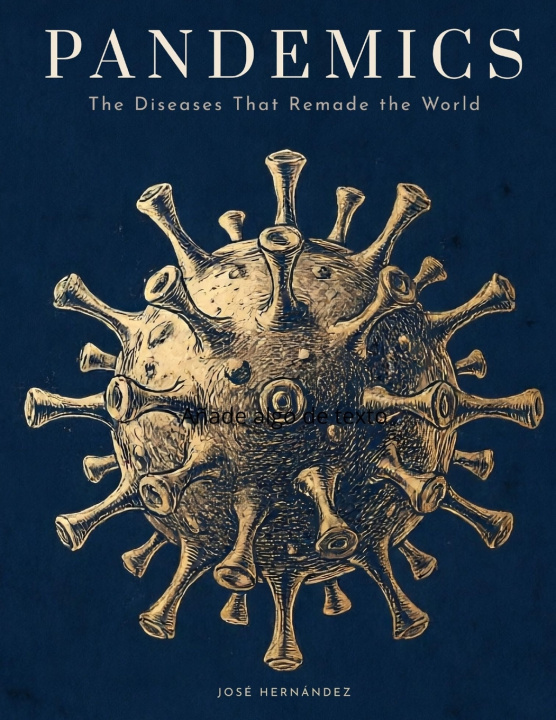
A third of Europe vanished in five years because of a flea. An empire of millions fell before a single soldier fired a shot. A world war killed fewer people than the flu that accompanied it. And in 2020, a silent cough brought the entire planet to a halt at the same time.
Pandemics are not an isolated chapter in history: they are, arguably, the force that has most often decided which civilizations survived, which empires fell, and which scientific breakthroughs were accelerated by sheer necessity. And yet it is the story least often told in classrooms.
This book journeys through ten diseases that changed the course of humanity-from the Black Death and smallpox to HIV, Ebola, and COVID-19-not as a list of dates and figures, but as human stories: the pope who sat between two bonfires to protect himself from the plague, the Italian doctor ignored for eighty years while correctly describing the cholera bacterium, the Hungarian biochemist demoted four times before winning the Nobel Prize for the vaccine that saved the world, the Somali boy who was the last case of smallpox and devoted his life to vaccinating others.
With historical rigor, cross-checked sources, and prose that reads like a novel, Pandemics answers the question that runs through the entire book: what patterns repeat themselves every time humanity faces something it cannot explain or control? And, more importantly: have we learned anything from the ten pandemics we've already lived through, before the next one arrives?
Ideal for readers of historical and scientific nonfiction, medical enthusiasts, and anyone who wants to understand the present through the crises we've already overcome.