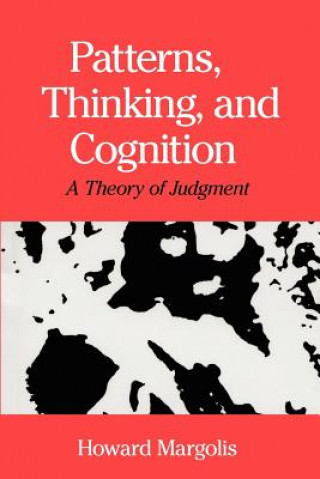
Könyv Patterns, Thinking, and Cognition - A Theory of Judgment Howard Margolis

Patterns, Thinking, and Cognition - A Theory of Judgment

Szerző: Howard Margolis
Nyelv: Angol
Kötés: Puha kötésű
Elérhetőség: Beszállítói készleten
Küldés 9-15 napon belül
15 899 Ft
For decades, both policymakers and analysts have been frustrated by sharp and stubborn conflicts bet...
Információk a könyvről

Szerző
Nyelv
Angol
Kötés
Könyv - Puha kötésű
Kiadva
1990
oldal
340
EAN
9780226505282
ISBN
0226505286
Enbook ID
04547228
Súly
556
Méretek
158 x 231 x 22

Teljes leírás

For decades, both policymakers and analysts have been frustrated by sharp and stubborn conflicts between expert and lay perceptions on issues of environmental risk. For example, most experts - even those opposed to nuclear power on other grounds - would see precautions like those now in place as adequate to protect against risks from nuclear waste. But the public finds that very hard to believe. Similar sharp conflicts of expert/lay intuition are evident on a wide range of risk issues, from the safety of bendictin as a treatment for morning sickness to the safety of irradiation of food to destroy microorganisms. In Dealing with Risk, Howard Margolis explores the expert/lay rift surrounding such contentious issues and provides a provocative new account. The usual explanation of expert/lay conflicts is that experts are focused only on a narrow notion of risk - such as potential fatalities - but lay intuition is concerned about a wide range of further concerns, such as fairness and voluntariness of exposure. Margolis argues that this "rival rationalities" view in a fundamental way misses the point of these controversies, since the additional dimensions of lay concern often are more plausibly interpreted as reflections of lay concern than as causes. Margolis argues that risk assessment typically involves weighing a broad range of often complicated trade-offs between costs and benefits. As laypersons, however, we are by definition forced to make judgments on complex matters beyond the scope of our normal experience. Especially in cases involving potential danger, we frequently discount nuance and respond more viscerally. Cognitively we fall back on default responses, all-purpose intuitionssuch as "better safe than sorry" or "nothing ventured, nothing gained." Such intuitions don't admit of careful balancing of pros and cons, and lay opinion consequently becomes polarized and at odds with the expert view.

Érdekelheti

8 742 Ft

Understanding Rhetoric

Eamon Cunningham
14 507 Ft
11 414 Ft

Mercies

Kiran Millwood Hargrave
3 961 Ft
8 630 Ft
17 344 Ft

Mindf*ck

Christopher Wylie
4 700 Ft
5 523 Ft
3 863 Ft

Visual Thinking Workbook

Willemien Brand Brand
4 767 Ft

Life 3.0

Max Tegmark
4 700 Ft

The City of Brass

S. A. Chakraborty
3 720 Ft

Reductionism in Art and Brain Science

Eric (Columbia University Medical Center) Kandel
7 891 Ft