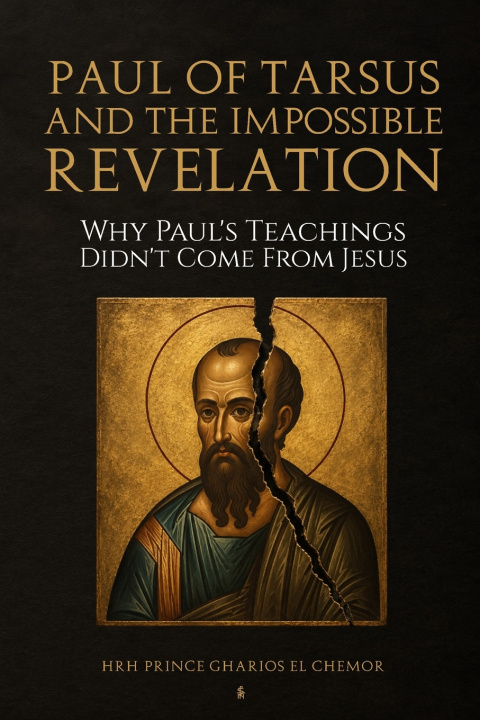
Did Paul preach the religion of Jesus-or create a different Christianity in his name?
Paul of Tarsus claimed that the gospel he preached was "not of human origin" but received through a revelation of Jesus Christ. That assertion became foundational to Christianity. Yet when Paul's teachings are placed beside the Hebrew Bible and the words attributed to Jesus in Matthew, Mark, and Luke, profound tensions emerge.
Jesus affirms the God of Israel, teaches obedience, upholds the Law, calls for repentance, and directs his earliest mission toward the people of Israel. Paul develops a gospel for the Gentile world in which justification by faith, freedom from the Law, participation in Christ's death and resurrection, and an expanded theory of salvation become central. Can both systems have come from an unchanging God?
Paul of Tarsus and the Impossible Revelation: Why Paul's Teachings Didn't Come from Jesus investigates that question through two independent lines of argument.
First, it applies an internal biblical consistency test. If God does not change, a later revelation cannot contradict principles previously attributed to God and reaffirmed by Jesus. Second, it applies historical-critical analysis, examining what can reasonably be established about Jesus, Paul, the Jerusalem apostles, the Antioch conflict, the development of Gentile Christianity, and the disputed authorship of several Pauline letters.
The book carefully separates the seven letters widely regarded as authentically Pauline from later disputed writings attributed to Paul. It explores:
• Jesus, Paul, and the continuing authority of the Torah
• Faith, works, obedience, and the meaning of righteousness
• Sacrifice, atonement, and the death of Jesus
• Circumcision, food laws, and Gentile inclusion
• Israel's covenant and Paul's theology of the Church
• Paul's conflicts with Peter, James, and the Jerusalem community
• The contradictory accounts of the Damascus revelation
• How Paul's interpretation became Christianity's dominant form
• Whether Paul's claim of divine authorization can remain logically coherent
Written from within Christianity rather than against it, this book argues that faith should never require the abandonment of reason. If rational thought is part of humanity's God-given nature, then examining scripture honestly is not an act of unbelief but one of intellectual and spiritual integrity.
This is a challenging investigation for readers of biblical criticism, Christian origins, historical Jesus research, Pauline theology, comparative religion, and the history of Christianity.