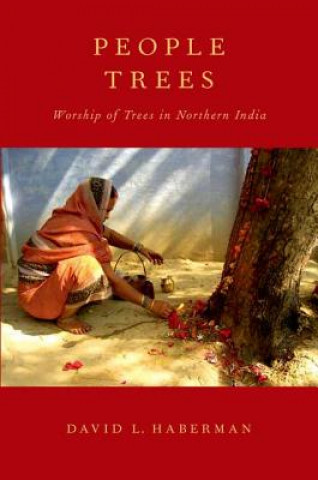
Könyv People Trees David L. Haberman

People Trees

Worship of Trees in Northern India

Nyelv: Angol
Kötés: Puha kötésű
Elérhetőség: Beszállítói készleten
Küldés 10-18 napon belül
16 955 Ft
This is a book about religious conceptions of trees within the cultural world of tree worship at the...


Információk a könyvről

Nyelv
Angol
Kötés
Könyv - Puha kötésű
Kiadva
2013
oldal
256
EAN
9780199929160
ISBN
0199929165
Enbook ID
04536785
Súly
398
Méretek
156 x 233 x 12

Teljes leírás

This is a book about religious conceptions of trees within the cultural world of tree worship at the tree shrines of northern India. Sacred trees have been worshipped for millennia in India and today tree worship continues there among all segments of society. In the past, tree worship was regarded by many Western anthropologists and scholars of religion as a prime example of childish animism or decadent "popular religion." More recently this aspect of world religious cultures is almost completely ignored in the theoretical concerns of the day. David Haberman hopes to demonstrate that by seriously investigating the world of Indian tree worship, we can learn much about not only this prominent feature of the landscape of South Asian religion, but also something about the cultural construction of nature as well as religion overall. The title People Trees relates to the content of this book in at least six ways. First, although other sacred trees are examined, the pipal-arguably the most sacred tree in India-receives the greatest attention in this study. The Hindi word "pipal" is pronounced similarly to the English word "people." Second, the "personhood" of trees is a commonly accepted notion in India. Haberman was often told: "This tree is a person just like you and me." Third, this is not a study of isolated trees in some remote wilderness area, but rather a study of trees in densely populated urban environments. This is a study of trees who live with people and people who live with trees. Fourth, the trees examined in this book have been planted and nurtured by people for many centuries. They seem to have benefited from human cultivation and flourished in environments managed by humans. Fifth, the book involves an examination of the human experience of trees, of the relationship between people and trees. Haberman is interested in people's sense of trees. And finally, the trees located in the neighborhood tree shrines of northern India are not controlled by a professional or elite class of priests. Common people have direct access to them and are free to worship them in their own way. They are part of the people's religion. Haberman hopes that this book will help readers expand their sense of the possible relationships that exist between humans and trees. By broadening our understanding of this relationship, he says, we may begin to think differently of the value of trees and the impact of deforestation and other human threats to trees.

Érdekelheti

Godly Ambition

Alister Chapman
12 578 Ft

Model Bakery Cookbook

Sarah Mitchell Hansen
8 500 Ft

Is Jazz Dead?

Stuart Nicholson
18 144 Ft
2 627 Ft
4 546 Ft

Honeycomb

Israel del Rio
5 494 Ft

2010: Odyssey Two

Arthur Charles Clarke
6 100 Ft
4 279 Ft

Pedestrian and the City

Carmen Hass Klau
25 611 Ft

IChina

Ulrich Beck
32 152 Ft
7 369 Ft

Plats du Jour

William Black
10 588 Ft

Azok a vásárlók, akik ezt a könyvet megvásárolták, a következőket is megvásárolták

25 500 Ft
11 986 Ft