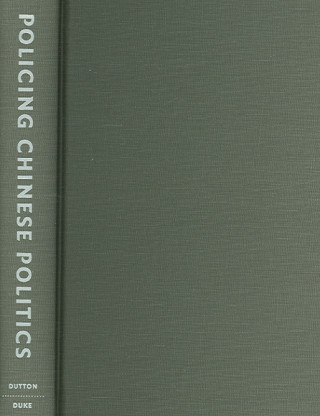
Könyv Policing Chinese Politics Michael R. Dutton

Policing Chinese Politics

A History

Nyelv: Angol
Kötés: Kemény kötésű
Elérhetőség: 50 % esély
Keressük az egész világon
55 724 Ft
In the first line of his Selected Works, Mao Zedong states, "Who are our enemies, who are our friend...

Információk a könyvről

Nyelv
Angol
Kötés
Könyv - Kemény kötésű
Kiadva
2005
oldal
432
EAN
9780822334774
ISBN
0822334771
Enbook ID
04938110
Súly
721

Teljes leírás

In the first line of his Selected Works, Mao Zedong states, "Who are our enemies, who are our friends, that is the question germane to the revolution." In Policing Chinese Politics, Michael Dutton argues that this friend/enemy dichotomy structured Chinese social order for much of the twentieth century, and the functioning of the Chinese police reflected this. Unlike western policing, which grew out of community efforts to control crime, modern Chinese policing--born in war and revolution--was founded to defend the Communist Party. Analyzing empirical evidence including extensive material from Chinese Public Security sources, Dutton tells the political history of modern China through the history of its policing practices. The deeply political character of the Chinese police was established in the 1920s, when the Communists were fighting against Chiang Kai-shek and the Nationalists. Despite being surrounded and badly outnumbered by their Nationalist enemies, the Communists dedicated themselves to self-destructive campaigns against "the enemy within"-real and imagined traitors to the Communist cause. Committing the police to ferreting out these internal enemies proved pivotal. For the next fifty years, the pursuit of "counter-revolutionary" enemies provided the governing principle of Chinese policing. This proved a surprisingly flexible mission, ranging from the political purges of the 1920s to the anti-drug and anti-prostitution sweeps of the 1950s to the prosecution of the Gang of Four and their followers in the 1970s. Dutton presents a timeline of this history in each chapter, relating political developments to contemporary policing practices. Political policing began to decline with the economic reforms of the 1970s, as policing stability replaced policing the revolutionary line. The history of the police force as a Party organ, however, continues to limit true reform.

Érdekelheti

Journeyman

Erskine Caldwell
12 934 Ft

Battling Demon Rum

Thomas R. Pegram
10 335 Ft
75 753 Ft
60 678 Ft
11 802 Ft
70 752 Ft

American Radicals

Holly Jackson
8 021 Ft
12 545 Ft

Ruth Orkin

Anne Morin
5 248 Ft
8 094 Ft
45 361 Ft

Wales and War

Matthew Cragoe
29 622 Ft

Art in the Streets

Los Angeles Museum of Contemporary Art
14 346 Ft
8 951 Ft

Chopin: Pianist and Teacher

Jean Jacques Eigeldinger
16 106 Ft
5 523 Ft

Azok a vásárlók, akik ezt a könyvet megvásárolták, a következőket is megvásárolták

New York,New York

Sueddeutsche Zeitung Jazz CD 0
5 234 Ft

Sprachdenker

Iris Forster
27 239 Ft
8 809 Ft

Duets

Claire & Friends Severac
6 687 Ft