Turn geotechnical monitoring data into better engineering decisions.
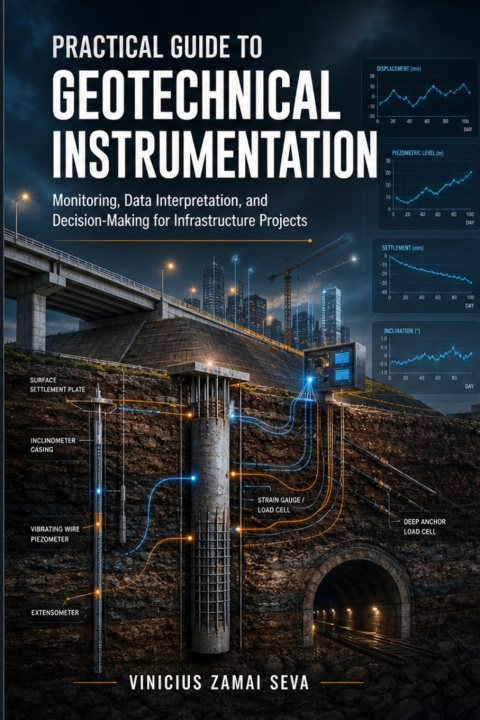
Practical Guide to Geotechnical Instrumentation is a field-oriented engineering guide for professionals who need to plan, install, interpret, and use geotechnical monitoring systems in real infrastructure projects.
Geotechnical instrumentation is not just about collecting readings. It is about understanding how the ground and structures behave during construction - and using that information to control risk, validate design assumptions, and make informed decisions before problems become failures.
Written for civil engineers, geotechnical engineers, construction professionals, project managers, and students, this book bridges the gap between theory and field practice. It explains the most important monitoring systems used in infrastructure works and shows how instrumentation data can support real engineering decisions.
Inside this book, you will learn how to:
- Understand the role of instrumentation in modern geotechnical engineering
- Select appropriate instruments for settlement, pore pressure, lateral deformation, and deep ground movement
- Interpret data from settlement plates, piezometers, inclinometers, extensometers, load cells, strain gauges, tiltmeters, and survey targets
- Use monitoring data to support the Observational Method
- Define alert levels, trigger thresholds, and response actions
- Integrate instrumentation with construction staging, risk management, and decision-making
- Apply real-time monitoring, dashboards, and automated data acquisition systems in infrastructure projects
The book includes practical explanations, engineering examples, case studies, figures, tables, and decision-making frameworks developed from real-world infrastructure experience.
Topics covered include:
- Fundamentals of ground behavior and monitoring parameters
- Settlement monitoring for embankments, structures, and soft soils
- Pore pressure monitoring using standpipe and vibrating wire piezometers
- Lateral deformation monitoring with inclinometers and automated systems
- Extensometers and deep ground deformation monitoring
- Convergence monitoring, tiltmeters, survey targets, load cells, strain gauges, and vibration monitoring
- Data acquisition, real-time monitoring, alerts, and dashboards
- Data interpretation and engineering decision-making
- Case studies and best practices for infrastructure monitoring programs
Whether you are working on bridges, tunnels, deep excavations, embankments, retaining walls, or transportation infrastructure, this guide will help you move beyond raw data and use instrumentation as a practical tool for safer and smarter engineering.
If you want to better understand ground behavior, improve monitoring programs, and make more confident geotechnical decisions, this book is for you.