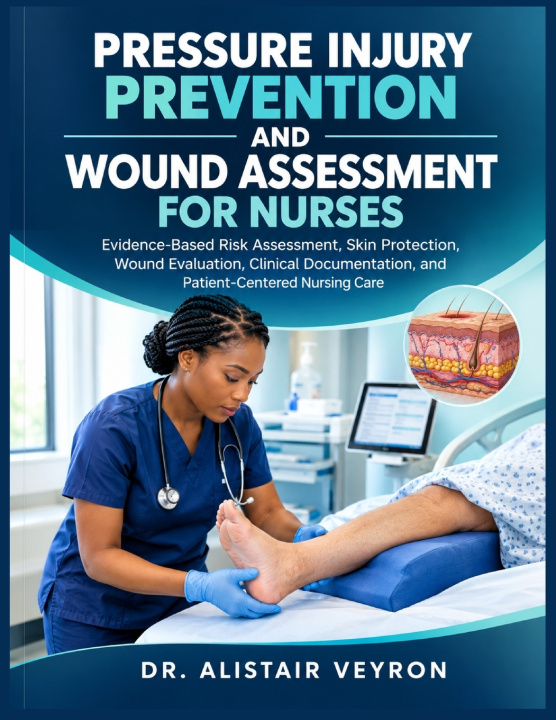
PRESSURE INJURY PREVENTION AND WOUND ASSESSMENT FOR NURSES
Evidence-Based Risk Assessment, Skin Protection, Wound Evaluation, Clinical Documentation, and Patient-Centered Nursing Care
PREVENT PRESSURE INJURIES BEFORE THEY DEVELOP. RECOGNIZE EARLY WARNING SIGNS. STRENGTHEN YOUR CLINICAL CONFIDENCE.
A small change in skin color. Persistent discomfort over a bony prominence. A medical device pressing against vulnerable tissue. These seemingly minor findings can signal the beginning of a serious pressure injury.
But effective pressure injury prevention requires more than routine repositioning and skin inspection.
It demands a clear understanding of tissue damage, accurate risk assessment, sound clinical judgment, individualized prevention strategies, and reliable documentation.
Pressure Injury Prevention and Wound Assessment for Nurses is a comprehensive, clinically focused educational resource designed to help nursing students and healthcare professionals understand the science behind pressure injuries and apply that knowledge to safer, more informed patient care.
Moving from foundational anatomy and pathophysiology to advanced assessment, prevention interventions, complex clinical situations, and quality improvement, this textbook connects essential nursing knowledge with practical bedside decision-making.
WHAT YOU WILL LEARN
- Understand Pressure Injury Development: Explore skin anatomy, tissue tolerance, pressure, shear, impaired perfusion, and the mechanisms responsible for tissue breakdown.
- Identify Patients at Risk: Learn to evaluate mobility, sensation, nutrition, moisture, circulation, medical devices, and other important risk factors.
- Perform Comprehensive Skin and Wound Assessments: Recognize early tissue changes, assess wound characteristics, and distinguish pressure injuries from other forms of skin damage.
- Understand Pressure Injury Staging: Examine established classification categories, unstageable wounds, and common assessment errors.
- Apply Individualized Prevention Strategies: Understand repositioning, pressure redistribution, heel protection, support surfaces, moisture management, skin care, and nutritional considerations.
- Manage Complex Clinical Situations: Explore prevention considerations and other vulnerable populations
DESIGNED FOR LEARNING & CLINICAL APPLICATION
Organized into
25 carefully structured chapters across five major Parts, this textbook provides a progressive learning experience that moves from essential principles to real-world nursing responsibilities.
Five practical appendices offer additional support through risk-assessment frameworks, wound-classification references, prevention checklists, documentation tools, and clinical competency guidance.
This resource is particularly valuable for:- Nursing students building foundational assessment and prevention skills.
- Registered nurses seeking to strengthen everyday clinical practice.
- Wound-care nurses expanding their understanding of risk recognition and prevention.
- Clinical educators and nursing instructors supporting professional development.
- Healthcare professionals involved in skin integrity, patient safety, and wound assessment.
BETTER ASSESSMENT BEGINS WITH BETTER UNDERSTANDING
Pressure injuries can develop quickly, progress beneath apparently intact skin, and create serious challenges for patients and healthcare teams. Effective prevention begins with recognizing vulnerability, understanding the mechanisms of tissue damage, and taking informed action before complications develop.
Whether you are preparing for clinical practice, strengthening your nursing knowledge, or improving your approach to wound assessment, this textbook provides a structured foundation for thoughtful, evidence-informed, patient-centered care.