When seconds matter, isolated facts are not enough. You need a structured way to assess rapidly, recognize immediate threats, choose appropriate interventions, and communicate the next step clearly.
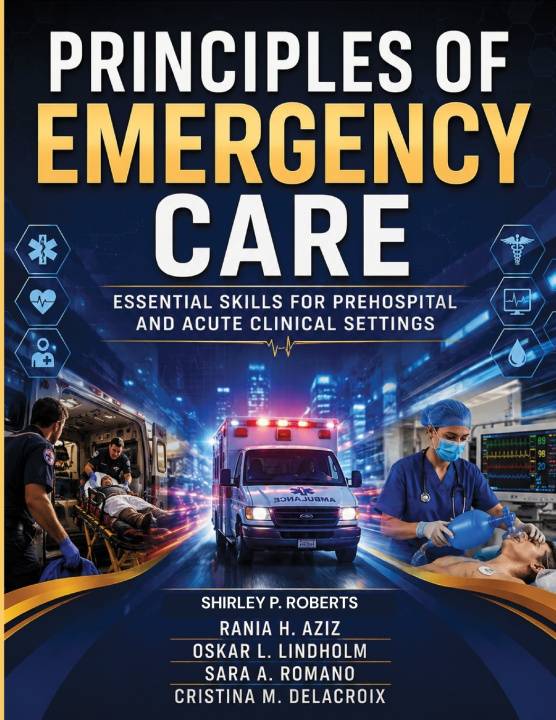
Principles of Emergency Care brings prehospital practice and acute hospital-based management into one organized learning framework. Across twenty major chapters arranged in seven thematic parts, you move from EMS systems, medical-legal responsibilities, and systematic patient assessment into airway management, respiratory and cardiovascular emergencies, shock, trauma, neurological crises, toxicology, special populations, disaster response, transport, handoff, and quality improvement.
The text is designed for EMT and paramedic students, emergency-care trainees, nurses, and experienced practitioners who need both structured study and targeted professional review. Learning objectives define the competencies for each chapter, while key-point summaries, clinical decision frameworks, anatomical diagrams, data tables, and illustrative images help connect physiology with practical judgment.
Inside this comprehensive professional reference, you will:
- Build a systematic assessment process for scene safety, primary and secondary surveys, vital-sign interpretation, reassessment, documentation, and transport decisions.
- Strengthen airway and ventilation judgment through anatomy, gas exchange, bag-mask technique, supraglottic devices, intubation, and surgical access.
- Recognize and organize management priorities for respiratory distress, dysrhythmias, acute coronary syndromes, cardiac arrest, shock, and post-resuscitation care.
- Approach hemorrhage, brain injury, spinal injury, musculoskeletal trauma, and thoracoabdominal emergencies with clearer clinical reasoning.
- Navigate neurological, endocrine, metabolic, toxicological, allergic, pediatric, obstetric, geriatric, and behavioral presentations within age-appropriate frameworks.
- Apply incident command, triage, casualty management, CBRN awareness, clinical handoff, crew resource management, and quality-improvement principles.
- Use chapter objectives, summaries, tables, visuals, and the emergency-medicine glossary for coursework, examination review, protocol education, and ongoing reference.
If you are building foundational competence or revisiting complex decisions, this volume helps you connect biomedical knowledge, procedural technique, communication, and professional responsibility. Use it as an educational companion while continuing to verify medications, procedures, and protocols against current local and authoritative guidance.