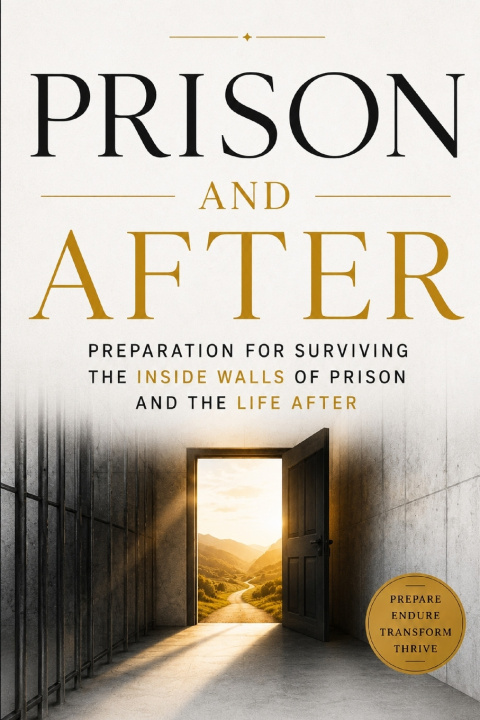
Most people have no idea what prison actually looks like from the inside. They know the version Hollywood built. The riots, the shower scenes, the one-liners. They have absorbed thousands of hours of a place they have never been, filtered through writers who have never been there either, packaged for drama and ratings rather than truth.
Then one day, for some of them, the door opens and they walk in.
Prison and After: Preparation for Surviving the Inside Walls and the Life After is not a memoir. It is not a policy argument. It is not a book of inspiration, and it makes no promises it cannot keep. It is the book that should have existed for every person who has ever received a sentence, supported someone receiving one, or simply wanted to understand what is actually happening behind the locked doors that most people spend a lifetime walking past without ever knowing what is inside.
Built on decades of peer-reviewed research, documented court records, investigative journalism, and the first-hand testimony of real people who have lived every stage of this experience, this book escorts the reader through the entire arc of incarceration, from the moment a judge's words land in a courtroom to the strange vertigo of the day the door finally opens again.
It begins before the sentence starts, in the courthouse silence and the weeks of sleepless preparation that follow. It walks into intake, where a person's name is traded for an eight-digit number. It maps the unwritten social codes that no handbook explains, the hidden economy that runs on ramen and favors, the violence that does not look the way movies promised, and the specific psychological adaptations that develop not because something is wrong with the person, but because something is right about their survival instinct. It gives honest, research-backed space to the loneliness, the guilt, the weight of missing milestones, and the surprising evidence for what actually promotes genuine change.
Then it follows the road back: release day, which is nothing like the triumphant scene the imagination builds; the strange grief of missing the very institution that confined you; the family that reorganized itself around your absence; the job interview where a box still needs to be checked; the first two weeks of freedom, which research has identified as one of the most medically dangerous periods in a returning citizen's life.
This book covers it all, and it covers it honestly: what to bring on surrender day, the difference between guilt and shame and why that difference predicts who returns to prison, why solitary confinement has been formally described by the United Nations as psychological torture when it exceeds fifteen days, how Norway's prison system produces an eighteen percent recidivism rate while America's produces one closer to sixty, and why the Federal Bonding Program and the Work Opportunity Tax Credit exist and why knowing about them changes a job interview.
The five appendices at the back are built for active use: a preparation checklist drawn from federal courts' own pre-surrender guidance, a reentry action plan, verified resources in the United States, the United Kingdom, and Norway, the current landscape of prison education and Pell Grant eligibility, and a frequently asked questions section built from the questions people actually ask.
Prison and After is written for the person who just received a sentence. For the spouse who spent last night searching the internet for answers and found none worth trusting. For the attorney who needs to hand a client something real after the hearing ends. For anyone who has ever driven past a prison and wondered, genuinely, what goes on in there.