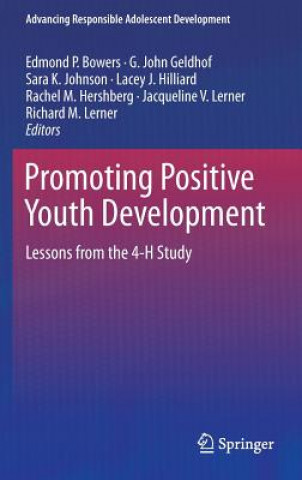
This book describes the developmental, longitudinal evidence base for promoting positive development among the diverse youth of the United States and makes recommendations for policy innovations and youth development programs as derived primarily from the 4-H Study of Positive Youth Development (PYD) data set. The book begins with an overview of relational developmental systems theories, the contemporary cutting-edge theories of adolescent development that frame the PYD perspective and describes the specific model that guides this work: the Five Cs (competence, confidence, connection, character, and caring) model of PYD. This model is used to frame the subsequent sections of the book. As such, the book then examines the role of individual strengths, including intentional self-regulation, emotional regulation, school engagement and hopeful future expectations in promoting positive development.