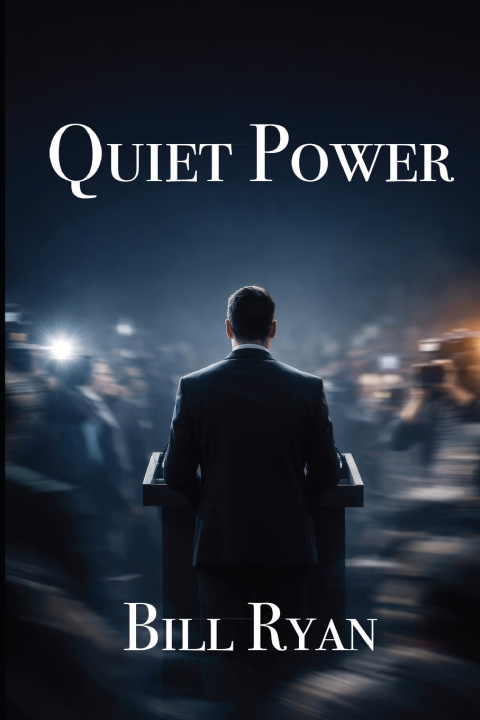
David Langston is running for the highest office in the country - and he refuses to perform certainty.
He will not claim to know what he does not know. He will not manufacture conviction he has not earned. In a political system engineered to reward the loudest, smoothest, most frictionless version of a candidate, Langston insists on being the quiet one, the deliberate one, the one who slows the room down instead of playing to it. The machine does not know what to do with him - so it sets out to absorb him, translate him, or wear him down.
Quiet Power follows a campaign that becomes a referendum on a harder question: can moral clarity survive inside modern systems of power? Around Langston move the people the system runs on - the operative who believes management is mercy, the journalist deciding whether to witness or to perform, the mentor who taught him that restraint is not weakness. As the country moves toward its decision, the novel asks who is really being tested: the candidate, or the citizens watching him.
A political novel for readers who suspect our institutions have confused noise for strength and certainty for truth, Quiet Power is a story about the cost of integrity - and about the quiet, unglamorous power of a person, or a country, that refuses to become something other than itself.