Where to place the patient is only the beginning. A limited x-ray operator also has to produce a safe, diagnostically useful image, every time.
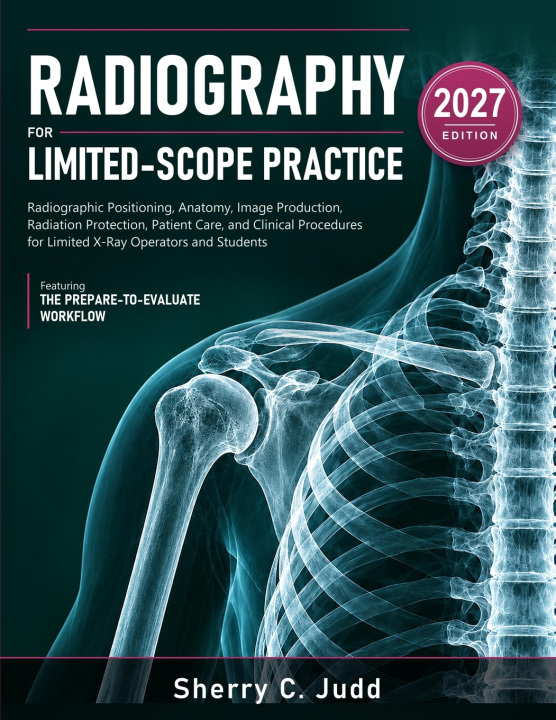
Limited-scope operators, medical assistants and entry-level imaging personnel perform chest, extremity, spine, skull and podiatric radiography in clinics, urgent care centers and offices across the country, often as the only imaging professional on site. This book teaches the complete workflow that work requires, from patient preparation and positioning to safe exposure and image evaluation.
Radiography for Limited-Scope Practice is organized around five steps that recur in every chapter and every examination: Prepare, Position, Expose, Protect and Evaluate. It moves from the operator's role, patient care and safety, through radiation physics, radiobiology and protection, to image production, digital imaging and image evaluation, and then to the procedures of every limited-scope module.
Inside you will find:
- 19 chapters in four parts, each opening and closing on a clinical case
- 95 full-color photoreal figures of positioning, anatomy and equipment
- 77 reference tables, plus Projection Cards for every routine projection
- Positioning Pearl, Landmark Link, Stop and Check, Dose Wise and Adapt the Exam panels
- Coverage aligned to the published limited scope licensing examination content specifications, with the proposed 2028 changes flagged
- Adaptations for trauma, children, older adults and patients who cannot hold the standard position
- Quick-reference appendices, a 79-term glossary and AMA-style references
Every procedure explains not only where to position the patient, but why each step matters and how to recognize and correct the errors that cause repeat exposures.
Perfect for limited x-ray operator and limited-scope radiography students, limited radiologic technologists, medical assistants performing permitted x-ray procedures, entry-level imaging personnel, and anyone preparing for a state limited-scope examination.
This book is an educational reference and does not replace an approved training program, state licensure requirements, facility protocols or qualified supervision.
Scroll up and add it to your study shelf.