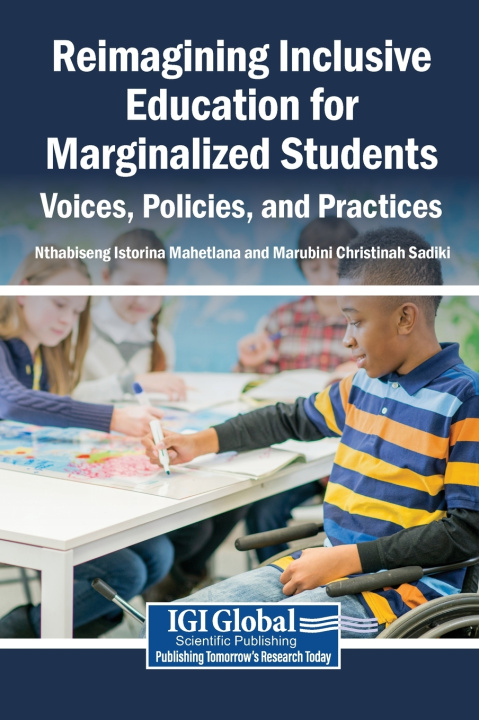
Inclusive education has long been framed as the integration of marginalized students into existing systems, yet this perspective often overlooks deeper structural inequities. Increasingly, there is a need to rethink inclusion as a transformative process that centers justice, belonging, and the full diversity of student experiences. By foregrounding the voices of those historically excluded or misrepresented, education can move beyond policy intentions toward more meaningful and responsive practice. Such an approach calls for a critical reexamination of how schools support, engage, and value all learners within evolving social and cultural contexts. Reimagining Inclusive Education for Marginalized Students: Voices, Policies, and Practices moves beyond policy rhetoric to focus on inclusion as a lived, transformative practice. Centering the voices of marginalized students, including those with disabilities and those from diverse cultural, linguistic, and gender identities, it positions their experiences as essential to rethinking and reshaping education. Covering topics such as colonial and post-colonial language legislation, the new wave of educational activism, and systemic transformation, this book is an excellent academic resource for graduate and doctoral students, educators, school leaders, advocacy groups, policymakers, and more.