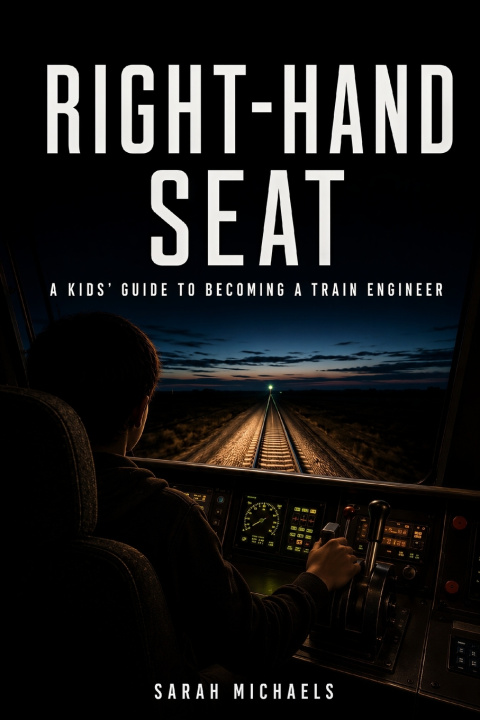
At 2:47 in the morning, somebody's phone rings. Eleven seconds later they know their train number and the time they're due at the yard. Two hours after that, they're sitting in the right-hand seat of a locomotive with twelve thousand tons behind them and a mile and a half of freight waiting to find out what they'll do next.
That person has one of the strangest jobs in America, and almost nobody can explain what it is.
This book explains it - not as a fantasy, but as an occupation with a paycheck, a schedule, a training program, and a set of trade-offs worth knowing before anyone signs up.
Readers ride along through a full trip: the four pages of restrictions that get read before the wheels turn, the horsepower math that decides whether a hill is survivable, the moment a car at a crossing starts inching forward and there is nothing the engineer can do about it for over a mile. Along the way, the physics gets taken apart. Why steel wheels on steel rails are both the most efficient way to move freight on land and the reason a train can't stop. How an air brake works backwards from what you'd expect, so that breaking it applies the brakes instead of releasing them. What twenty feet of slack does to a train, and why it can snap a coupler.
Then it deals with the parts most career books skip. What the job pays, using current federal wage data. How railroad retirement differs from Social Security, and what thirty years of service actually buys. Why the day you were hired governs your schedule more than how good you are. What the extra board does to a body, and why more people leave over the calendar than over the work.
Written for ages 9-12.