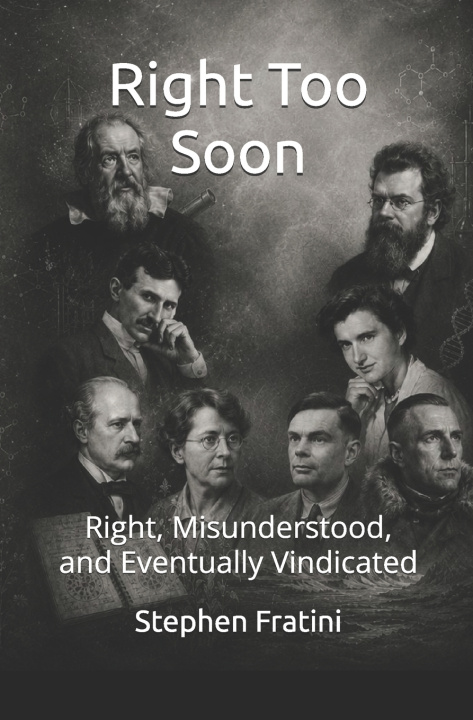
History is written by the victors, but science is often advanced by the outcasts. "Right Too Soon" explores the recurring human drama of brilliant minds who saw the truth long before the world was ready to accept it. From astronomy and mathematics to medicine and computer science, this book gathers the stories of scientists, engineers, and scholars who faced ridicule, institutional gatekeeping, and lost careers simply for being correct. Instead of a simple gallery of heroes and villains, it offers a careful look at why established authorities reject new evidence and how the scientific method eventually forces the truth into the light.
Through detailed profiles spanning five centuries, you will trace the lives of pioneers like Georg Cantor, Barbara McClintock, and Ignaz Semmelweis. You will see how their groundbreaking ideas in genetics, physics, and infection control were initially dismissed as impossible or heretical. Alongside these biographical accounts, detailed appendices explore the larger controversies behind their discoveries, the historical shortcomings of the Nobel Prize, and the mathematical foundations of probability. "Right Too Soon" is a standing argument for intellectual humility, urging us to hold our certainties loosely and to listen to the people the establishment has decided to ignore.