A sharp, burning pain starts in your lower back or buttock and runs down one leg, and sitting in the car or at your desk makes it worse.
That pain is often sciatica, and the advice around it can be confusing. A friend tells you to rest in bed. A website says to stretch through it. Someone else mentions an injection or surgery. Meanwhile you're not sure whether the numbness in your foot is normal or a reason to call your doctor today.
Sciatica Explained is a plain-language guide for anyone dealing with sciatica, or helping someone who is. It walks you through what is going on in your body, whether the cause is a herniated disc, spinal stenosis or piriformis syndrome in the buttock, and what you can do about it at home, at work, in bed at night and at your next appointment.
Here's some of what's covered:
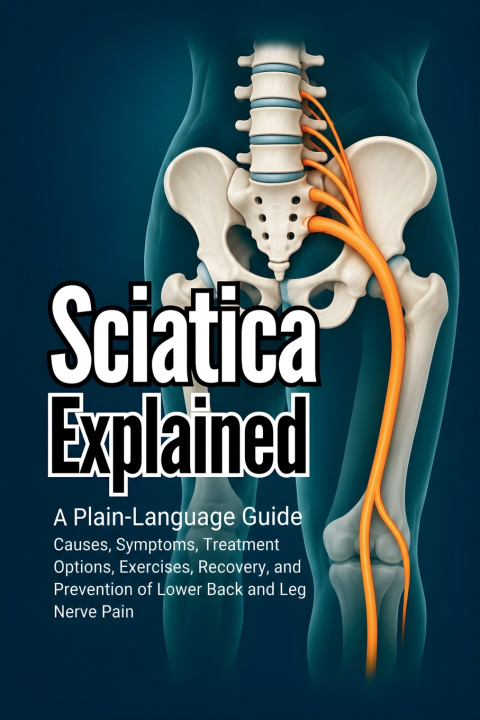
- How the sciatic nerve runs from your lower spine all the way to your foot, and why a problem in your back can be felt in your toes
- The warning signs that mean go to the emergency department now, see a doctor within a few days, or book a routine visit
- What happens at a checkup, why a scan usually isn't needed right away, and questions worth asking your doctor
- Self-care for the first few weeks, including how much rest is enough, ice or heat, and sleeping positions that ease the pressure
- An honest look at medicines, epidural injections and surgery, with what the evidence supports and what it doesn't
- Gentle stretches and four common exercises a physical therapist may suggest
- Posture, sitting, lifting and footwear habits that help keep sciatica from coming back, plus what to know if the pain becomes chronic
Everything in the book comes from national health services, clinical guidelines and research reviews, written up in everyday language. Where popular advice and the evidence disagree, the book tells you so, and a chapter on common myths covers treatments worth skipping. You'll also find a symptom tracker, a one-page quick reference and a glossary of the medical words you'll hear. It's meant to help you understand your options and talk with your doctor, not to replace medical care.
If sciatica has you unsure what to do next, this book gives you a clear place to start.