Könyv Science for All Children Center for Science

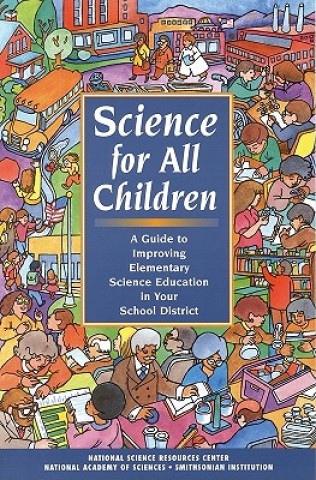
Science for All Children

A Guide to Improving Elementary Science Education in Your School District

Nyelv: Angol
Kötés: Puha kötésű
Elérhetőség: 50 % esély
Keressük az egész világon
45 794 Ft
Remember the first time you planted a seed and watched it sprout? Or explored how a magnet attracted...


Információk a könyvről

Nyelv
Angol
Kötés
Könyv - Puha kötésű
Kiadva
1997
oldal
240
EAN
9780309052979
ISBN
0309052971
Enbook ID
04576382
Súly
363
Méretek
152 x 229 x 13

Teljes leírás

Remember the first time you planted a seed and watched it sprout? Or explored how a magnet attracted a nail? If these questions bring back memories of joy and wonder, then you understand the idea behind inquiry-based science--an approach to science education that challenges children to ask questions, solve problems, and develop scientific skills as well as gain knowledge. Inquiry-based science is based on research and experience, both of which confirm that children learn science best when they engage in hands-on science activities rather than read from a textbook. The recent National Science Education Standards prepared by the National Research Council call for a revolution in science education. They stress that the science taught must be based on active inquiry and that science should become a core activity in every grade, starting in kindergarten. This easy-to-read and practical book shows how to bring about the changes recommended in the standards. It provides guidelines for planning and implementing an inquiry-based science program in any school district. The book is divided into three parts. "Building a Foundation for Change," presents a rationale for inquiry-based science and describes how teaching through inquiry supports the way children naturally learn. It concludes with basic guidelines for planning a program. School administrators, teachers, and parents will be especially interested in the second part, "The Nuts and Bolts of Change." This section describes the five building blocks of an elementary science program: Community and administrative support. A developmentally appropriate curriculum. Opportunities for professional development. Materials support. Appropriate assessment tools. Together, these five elements provide a working model of how to implement hands-on science. The third part, "Inquiry-Centered Science in Practice," presents profiles of the successful inquiry-based science programs in districts nationwide. These profiles show how the principles of hands-on science can be adapted to different school settings. If you want to improve the way science is taught in the elementary schools in your community, Science for All Children is an indispensable resource.

Érdekelheti

Fifties

David Halberstam
6 500 Ft

Collection of Hieroglyphs

Francis Llewellyn Griffith
5 719 Ft

Basics Materials

Manfred Hegger
8 125 Ft
2 902 Ft
5 406 Ft

Selected Writings

Oliver Goldsmith
6 482 Ft

Mobilities and Health

Anthony C. Gatrell
86 200 Ft

Expert Systems in Banking

Dimitris N. Chorafas
61 807 Ft

Azok a vásárlók, akik ezt a könyvet megvásárolták, a következőket is megvásárolták

3 879 Ft
3 357 Ft
5 777 Ft