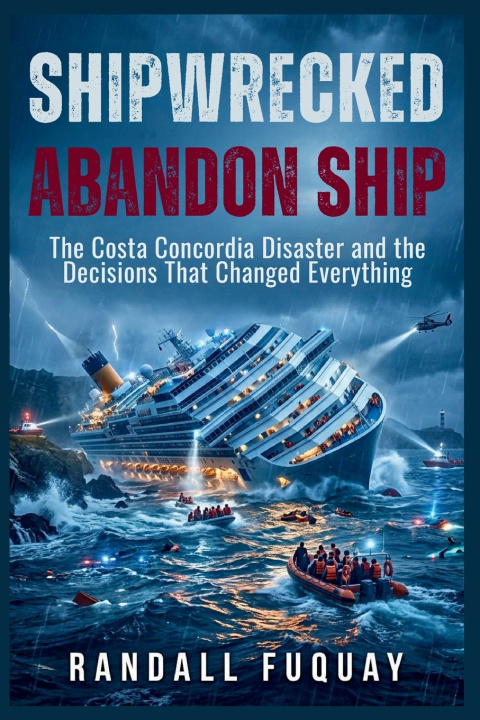
At 9:45 p.m. on January 13, 2012, the Costa Concordia was carrying more than 4,200 people past a small Tuscan island when her captain made a decision that would end in the worst cruise ship disaster in modern history.
He wanted to give the island a show: a close pass along the coast, engines slowed, horn sounding in tribute to a retired mentor and a crew member's hometown. He had done it before. This time, the ship's hull met a charted rock at fifteen knots, tearing a 53-meter gash below the waterline and flooding five compartments in minutes. Within the hour, the ship had lost all power and stability, and she was drifting toward the shore she was never supposed to touch.
What followed was chaos. Passengers scrambled through corridors tilted past thirty degrees. Lifeboats hung uselessly over the wrong side of a capsizing hull. Families were separated in the dark. And a captain left before hundreds of his own passengers did, refusing for hours to return even as a coast guard commander screamed four words into the phone that would follow him for the rest of his life: "vada a bordo, cazzo." Get back on board, for God's sake.
Thirty-two people never made it home.
Built from court testimony, the official Italian investigation, and years of documented reporting, Abandon Ship reconstructs the disaster minute by minute. It traces the culture of quiet rule-breaking that made the collision possible, the crew members who stayed when their captain did not, and the two and a half year, record-breaking salvage operation it took to raise a 114,000-ton wreck off the ocean floor.
This is the story behind the headlines. This is what actually happened on the Costa Concordia.
Read it, then decide for yourself who is really to blame.