What if the most expensive thing in your life is something you've never actually looked at?
Interest. It's silent. It's relentless. And it's quietly costing the average American household tens of thousands of dollars over a lifetime, money that disappears so gradually most people never even notice it's gone.
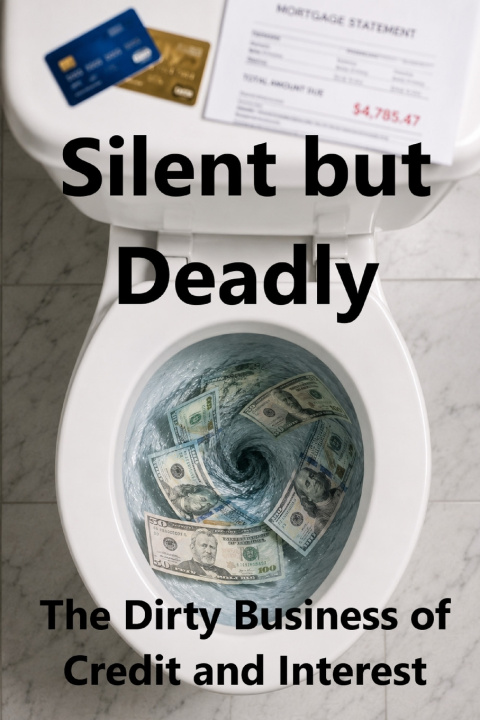
Silent but Deadly: The Dirty Business of Credit and Interest pulls back the curtain on a system built, deliberately, over the past century to make borrowing feel normal, easy, even smart, and shows you exactly how to fight back, with real math, real tools, and zero fluff.
Follow one relatable character through four familiar financial positions, sitting comfortably unaware, hanging on for dear life, tangled between business and personal finances, and fully underwater, and see, with real numbers, how each one works, and exactly how to climb back out.
What makes this book different: most personal finance books are full of great ideas and short on the part that actually matters, who to call, what to ask, and what to physically do next. Silent but Deadly closes that gap. Every chapter ends with a "Do This Now" section: the specific phone script to use, the exact calculation to run, the real free resource to call, not vague advice, but an actual next step you can take today.
This book also points you to free, real-time digital tools that let you run your own numbers and check back on your progress whenever your situation changes. You'll find exactly where inside.
Inside, you'll learn:
The real, sourced math behind credit card minimum payments, mortgage amortization, and why "biweekly payments" aren't the secret weapon you think they are.
How a century of deliberate marketing history, starting with the man who invented modern public relations, built the credit culture we live in today.
A clear, judgment-free framework for understanding exactly where you stand financially, and exactly what to do about it, at every stage.
The specific questions to ask a lender, a credit counselor, or a tax professional, so you walk into every financial conversation informed instead of guessing.
Why "free" rarely means free, and a simple three-question habit that protects you from algorithm-driven spending for the rest of your life.
This is not a book about shame. It's not a book about willpower. It's a book about seeing clearly, asking the right questions, and finally getting a straight, honest, occasionally funny answer about where your money is actually going, and what to do next.