Someone in your community is living this right now. They just haven't told anyone.
Behind the closed doors of Muslim homes - in cities and villages, in wealthy households and humble ones, among the educated and the unlettered - marriages are destroying people. Not always with fists. More often with words. With silence. With the systematic dismantling of a person's confidence, dignity, and sense of self. With Qurʾānic verses misquoted to justify control. With the communal instruction to endure.
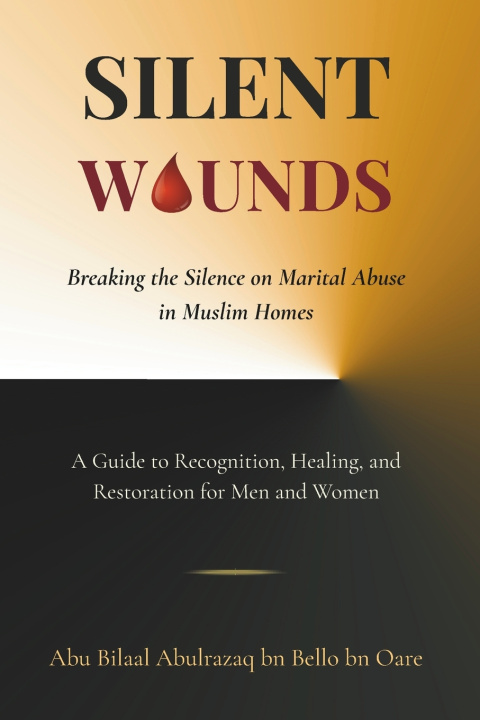
Silent Wounds: Breaking the Silence on Marital Abuse in Muslim Homes is the book that names what has been happening - and what Islam actually says about it.
Across 409 pages and twenty-five chapters, this book covers:
- What marital abuse actually is - physical violence, emotional manipulation, gaslighting, coercive control, financial abuse, and the weaponisation of religion, all defined with clarity and illustrated with examples Muslim readers will recognise
- Male victims - an entire section devoted to the experience of husbands who are abused, a subject the Islamic literature has almost entirely ignored
- Female victims - the statistical reality addressed honestly, including the specific forms of harm most commonly inflicted on Muslim women
- The Islamic legal framework - what the classical scholars actually said about marital harm; what ṭalāq, khulʿ, and faskh actually provide; and what rights Islam has always given the abused that community culture has suppressed
- Healing and recovery - the long work of rebuilding after abuse, addressed with compassion and Islamic grounding
- Prevention and community responsibility - for imams, counsellors, parents, and Islamic organisations
This book is not anti-marriage. It is not anti-men. It is not anti-women. It is pro-justice - grounded in the Qurʾān, the Sunnah, and fourteen centuries of Islamic scholarship.
The book carries a foreword by Ustādhah Zaynab Ansari, scholar-in-residence at Tayseer Seminary (United States) and one of the first women to hold such a role in an Islamic institution in North America. Of the book she writes: "May Allāh reward Abu Bilaal for writing the one book on Muslim marriage that I think everyone needs to read."
Muhammad Sani Umar, Esq., Legal Practitioner and Islamic Personal Law Advocate, calls it "a powerful and uncensored exposé of open but unspoken secrets" - and adds that having himself begun writing on Islamic personal law, he decided to pause after reading it, not from lack of will, but from recognition of the depth, balance, and courage with which the book approaches its subject.
This book is for:
Muslim couples, imams, Islamic marriage counsellors, students of Islamic family law, parents, pre-marital counselling facilitators, and anyone who has ever sat with a friend in a troubled marriage and not known what to say.
Because silence does not heal wounds. Naming them is the beginning of mercy.