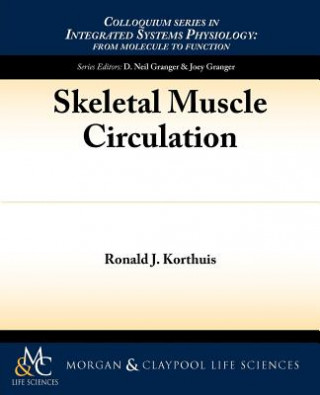
Könyv Skeletal Muscle Circulation Ronald Korthuis

Skeletal Muscle Circulation

Szerző: Ronald Korthuis
Nyelv: Angol
Kötés: Puha kötésű
Elérhetőség: Beszállítói készleten
Küldés 9-15 napon belül
17 696 Ft
The aim of this treatise is to summarize the current understanding of the mechanisms for blood flow...


Információk a könyvről

Szerző
Nyelv
Angol
Kötés
Könyv - Puha kötésű
Kiadva
2010
oldal
144
EAN
9781615041831
ISBN
1615041834
Enbook ID
04839003
Súly
274
Méretek
234 x 194 x 8

Teljes leírás

The aim of this treatise is to summarize the current understanding of the mechanisms for blood flow control to skeletal muscle under resting conditions, how perfusion is elevated (exercise hyperemia) to meet the increased demand for oxygen and other substrates during exercise, mechanisms underlying the beneficial effects of regular physical activity on cardiovascular health, the regulation of transcapillary fluid filtration and protein flux across the microvascular exchange vessels, and the role of changes in the skeletal muscle circulation in pathologic states. Skeletal muscle is unique among organs in that its blood flow can change over a remarkably large range. Compared to blood flow at rest, muscle blood flow can increase by more than 20-fold on average during intense exercise, while perfusion of certain individual white muscles or portions of those muscles can increase by as much as 80-fold. This is compared to maximal increases of 4- to 6-fold in the coronary circulation during exercise. These increases in muscle perfusion are required to meet the enormous demands for oxygen and nutrients by the active muscles. Because of its large mass and the fact that skeletal muscles receive 25% of the cardiac output at rest, sympathetically mediated vasoconstriction in vessels supplying this tissue allows central hemodynamic variables (e.g., blood pressure) to be spared during stresses such as hypovolemic shock. Sympathetic vasoconstriction in skeletal muscle in such pathologic conditions also effectively shunts blood flow away from muscles to tissues that are more sensitive to reductions in their blood supply that might otherwise occur. Again, because of its large mass and percentage of cardiac output directed to skeletal muscle, alterations in blood vessel structure and function with chronic disease (e.g., hypertension) contribute significantly to the pathology of such disorders. Alterations in skeletal muscle vascular resistance and/or in the exchange properties of this vascular bed also modify transcapillary fluid filtration and solute movement across the microvascular barrier to influence muscle function and contribute to disease pathology. Finally, it is clear that exercise training induces an adaptive transformation to a protected phenotype in the vasculature supplying skeletal muscle and other tissues to promote overall cardiovascular health. Table of Contents: Introduction / Anatomy of Skeletal Muscle and Its Vascular Supply / Regulation of Vascular Tone in Skeletal Muscle / Exercise Hyperemia and Regulation of Tissue Oxygenation During Muscular Activity / Microvascular Fluid and Solute Exchange in Skeletal Muscle / Skeletal Muscle Circulation in Aging and Disease States: Protective Effects of Exercise / References

Érdekelheti

Driven Apart

Annis May Timpson
42 910 Ft
6 723 Ft

Seasons Change

Russell Anthony Depersia
9 937 Ft
5 112 Ft
7 165 Ft

Killing Woods

Lucy Christopher
3 183 Ft

Licence to Dream

Anna Jacobs
3 938 Ft
2 491 Ft

RITUAL EARTH ORACLE

ENGRACIA ANDRES
7 870 Ft
10 237 Ft

Stuart Hall

James Proctor
12 741 Ft

Skeleton Hill

Peter Lovesey
4 330 Ft
5 080 Ft
29 218 Ft

Food for All

John Madeley
18 629 Ft
13 973 Ft

Azok a vásárlók, akik ezt a könyvet megvásárolták, a következőket is megvásárolták

14 678 Ft

Poutníci v zemi na Nilu

Mlada Mikulicová
4 402 Ft

Besonderes Verwaltungsrecht

Eberhard Schmidt-Aßmann
21 732 Ft

Poder Secreto de la Oratoria

Patricia Lucía Mingrone de Camarota
3 821 Ft

MENTES INQUIETAS

ARACELI FERNANDEZ VIVAS
2 732 Ft

Foresta Nera

Hahn Friedemann
5 647 Ft
15 134 Ft
13 067 Ft