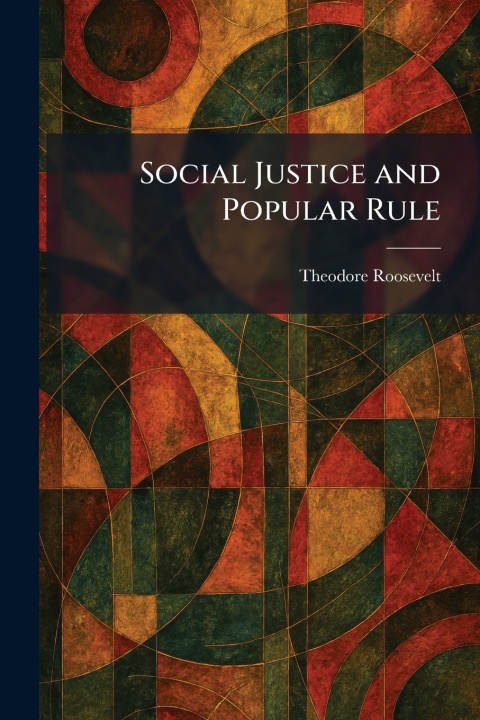
"Social Justice and Popular Rule" is a profound collection of essays and addresses by Theodore Roosevelt, reflecting the core principles of his Progressive political philosophy. As the 26th President of the United States and a central figure in the early 20th-century reform movement, Roosevelt articulates a vision for an America where economic opportunity and social fairness are accessible to all citizens. The work delves into the essential relationship between a healthy democracy and the protection of individual rights against the excesses of corporate power and institutional corruption.
Throughout this volume, Roosevelt champions the cause of the working class, calling for industrial justice and the regulation of trusts. He argues that "popular rule" is not merely a political abstraction but a necessary mechanism for ensuring that the government remains responsive to the needs of the people. By examining issues ranging from labor laws to the conservation of natural resources, the text provides a comprehensive look at the "Square Deal" policy and Roosevelt's unwavering commitment to the common good. "Social Justice and Popular Rule" stands as a foundational text for understanding American political thought and the historical evolution of the federal government's role in promoting social equity. It remains a vital read for those interested in political science, history, and the enduring quest for a more just society.
This work has been selected by scholars as being culturally important, and is part of the knowledge base of civilization as we know it. This work was reproduced from the original artifact, and remains as true to the original work as possible. Therefore, you may see the original copyright references, library stamps (as most of these works have been housed in our most important libraries around the world), and other notations in the work.
This work is in the public domain in the United States of America, and possibly other nations. Within the United States, you may freely copy and distribute this work, as no entity (individual or corporate) has a copyright on the body of the work.
As a reproduction of a historical artifact, this work may contain missing or blurred pages, poor pictures, errant marks, etc. Scholars believe, and we concur, that this work is important enough to be preserved, reproduced, and made generally available to the public. We appreciate your support of the preservation process, and thank you for being an important part of keeping this knowledge alive and relevant.