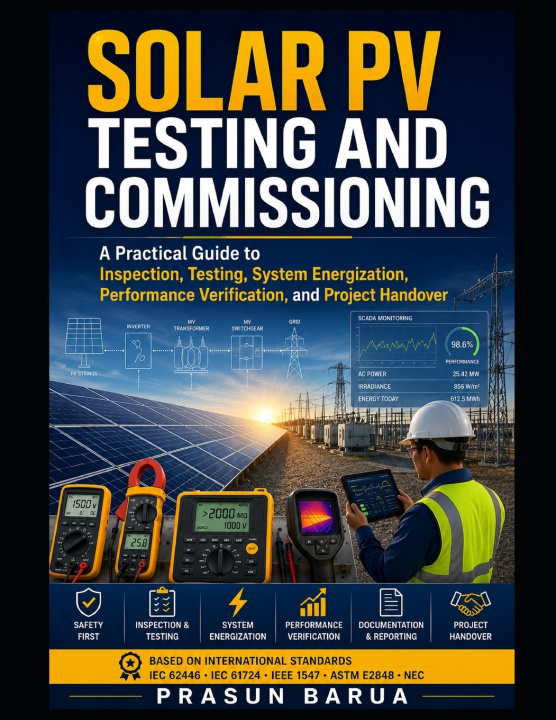
Solar PV testing and commissioning is one of the most critical stages in the lifecycle of a photovoltaic power plant. It confirms that every component has been installed correctly, operates safely, complies with applicable engineering standards, and performs as intended before the system is placed into commercial operation. A successful commissioning program not only verifies technical compliance but also minimizes operational risks, improves long-term reliability, and protects the substantial financial investment made in every solar project.
Solar PV Testing and Commissioning is a comprehensive practical guide developed for engineers, technicians, EPC professionals, quality assurance personnel, project managers, and engineering students involved in utility-scale and commercial & industrial (C&I) solar PV projects. Rather than treating commissioning as a simple checklist, this book presents it as a structured engineering discipline that combines technical knowledge, systematic testing, safety management, performance verification, documentation, and effective problem-solving.
The book follows the complete testing and commissioning process in a logical sequence, beginning with an introduction to solar PV systems and commissioning before progressing through component inspection, electrical testing, commissioning procedures, testing equipment, protection systems, safety testing, performance monitoring, SCADA integration, and final acceptance testing.
Readers are guided through the inspection and commissioning of solar modules, cables, combiner boxes, inverters, transformers, switchgear, protection relays, medium-voltage systems, and grid interconnection equipment using practical, step-by-step procedures based on established industry practices. The book also explains continuity testing, insulation resistance testing, grounding verification, polarity checks, string testing, functional testing, and performance verification techniques used in real projects.
Beyond technical procedures, this book emphasizes the importance of engineering judgment, quality assurance, documentation, troubleshooting, and effective communication throughout the commissioning process. It explains how experienced commissioning engineers identify potential issues before system energization, investigate abnormal test results, manage punch-list items, coordinate with clients and utility representatives, and prepare projects for successful handover.
The final chapters address performance monitoring, SCADA integration, contractual acceptance testing, project documentation, operational readiness, and the transition from construction to long-term operation and maintenance (O&M). Practical examples, engineering calculations, inspection checklists, troubleshooting guidance, and real-world project scenarios are included throughout the book to reinforce learning and bridge the gap between engineering theory and field application.