INTRODUCTION TO THE SPECTACLED BEAR
Overview
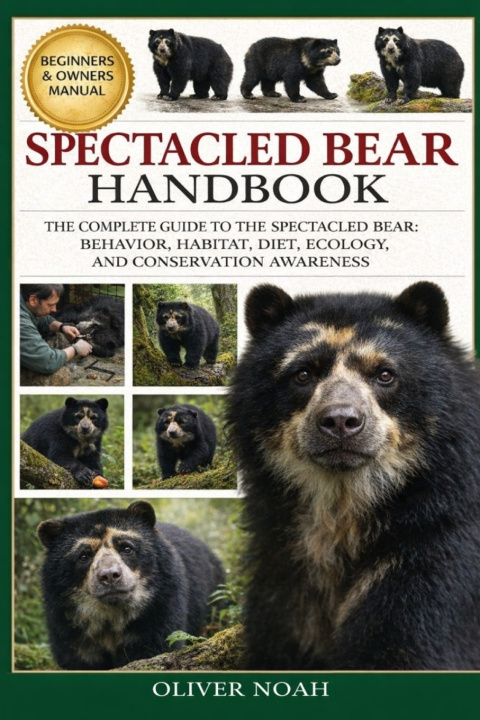
The spectacled bear, widely known as the Andean bear, stands as one of the most fascinating and least understood members of the bear family. Native to the mountainous regions of South America, this species carries an air of quiet mystery shaped by its elusive nature and its ability to survive in some of the most rugged and diverse environments on the continent. Unlike many of its relatives that roam vast plains or icy tundras, the spectacled bear thrives in dense cloud forests, steep mountain slopes, and remote valleys where human presence is minimal.
Its name originates from the distinctive pale markings that often appear around its eyes, giving the impression of eyeglasses. These markings vary greatly from one individual to another, making each bear visually unique. In some cases, the patterns extend down the throat and chest, creating an almost artistic contrast against its otherwise dark fur. This individuality not only aids researchers in identifying specific animals in the wild but also contributes to the bear's striking appearance.
The spectacled bear is the only bear species native to South America and the sole surviving member of the short-faced bear lineage. This alone places it in a category of exceptional scientific interest. While other bear species have adapted to environments ranging from Arctic ice to temperate forests, the spectacled bear has carved out a niche in the Andes, a region defined by dramatic elevation changes, unpredictable weather patterns, and dense vegetation.
Despite its size and strength, the spectacled bear is not typically aggressive. It is known for its shy and solitary behavior, often avoiding contact with people whenever possible. Much of its life is spent navigating forest canopies, foraging for food, and moving quietly through its territory. This reserved lifestyle has made it difficult for researchers to observe and study the species in detail, which is why much of what is known today has been gathered through years of patient fieldwork and technological advancements such as camera traps and GPS tracking.
In many ways, the spectacled bear represents a bridge between the ancient past and the modern world. It carries traits that hint at its evolutionary history while simultaneously adapting to the changing landscapes of contemporary South America. Understanding this species is not only about studying an animal but also about exploring the complex ecosystems it inhabits and the delicate balance required to sustain them.
Scientific Classification
Scientifically known as Tremarctos ornatus, the spectacled bear occupies a unique position within the biological classification of mammals. It belongs to the family Ursidae, which includes all modern bear species, yet it stands apart as the only living representative of the subfamily Tremarctinae, often referred to as the short-faced bears.
This classification reveals a deep evolutionary story. Millions of years ago, the Tremarctinae lineage included several large and powerful species that roamed across the Americas. Among them were the giant short-faced bears, which were significantly larger than any bear alive today. Over time, environmental changes and other factors led to the extinction of these ancient giants, leaving the spectacled bear as the last surviving link to this once-dominant group.
The genus name "Tremarctos" translates roughly to "hole bear," a reference to certain anatomical features in the skull, while "ornatus" means "adorned," highlighting the distinctive markings that define the species. These scientific terms not only describe the bear's physical traits but also connect it to a broader narrative of evolution, adaptation, and survival.