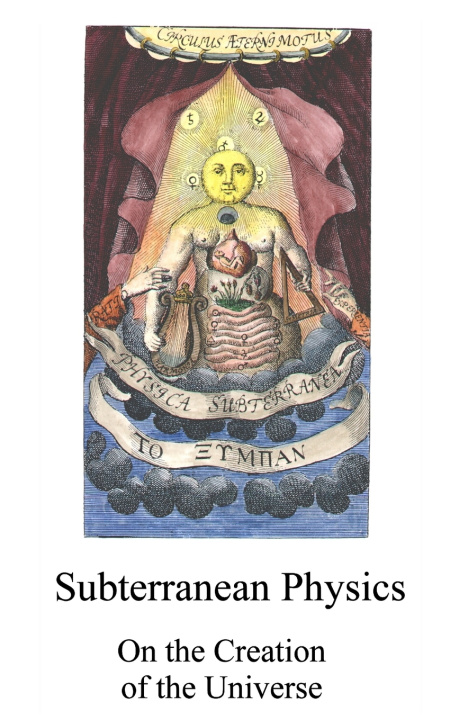
Subterranean Physics: An Introduction or Prologue presents a practical, eyewitness-based method for studying the hidden world beneath the earth. The author criticises writers who discuss mines, minerals, springs, and subterranean processes from hearsay rather than experience, insisting that one eyewitness is worth more than many second-hand theorists. The study of subterranean nature is difficult and dangerous, requiring descent into mines with ladders and lights, but this difficulty makes direct observation all the more necessary.
The work is organised around the idea of two great laboratories: the subterranean laboratory of Nature and the superterranean laboratory of Art. Nature is the mistress or mother; Art is the servant, handmaid, or midwife. The investigator must first study minerals and subterranean bodies in their natural places, then examine them by artificial means, especially through fire, in order to understand their inner nature. The book, therefore, aims to remove obscure speculation and offer practical 'kernels of wisdom' for natural philosophers and chemical practitioners.
Its larger subject is the origin and formation of subterranean things. The author begins with Creation and the universal production of bodies from Chaos, then turns to the earth-water globe and the motions of earth and water within it. Water is treated as the vehicle and moving cause of mixture: it carries, dissolves, impregnates, and sets mineral matter in motion. The author challenges simple explanations of mineral waters as merely ordinary water leaching mineral veins, arguing that long-lasting acidic and hot springs would otherwise exhaust their channels and sources.
A central theory is the circulation of subterranean water. Sea water descends toward the earth's centre, loses part of its salinity, and later rises again toward the surface as vapour or water, altered by the regions through which it passes. In its ascent, it produces springs, mineral waters, hot baths, and other effects. The text also describes subterranean effluvia: aerial, watery, and earthy. Mineral and sulphurous exhalations, called Witterungen by miners, may burn plants, earth, and stone, produce pestilential vapours, or cause earthquakes when obstructed.
The planned work divides theory and practice. Book One treats principles, motion, mixture, dissolution, and properties of subterranean bodies; Book Two examines salts, vitriol, sulphur, metals, stones, earths, amber, coral, and related substances through practical investigation.