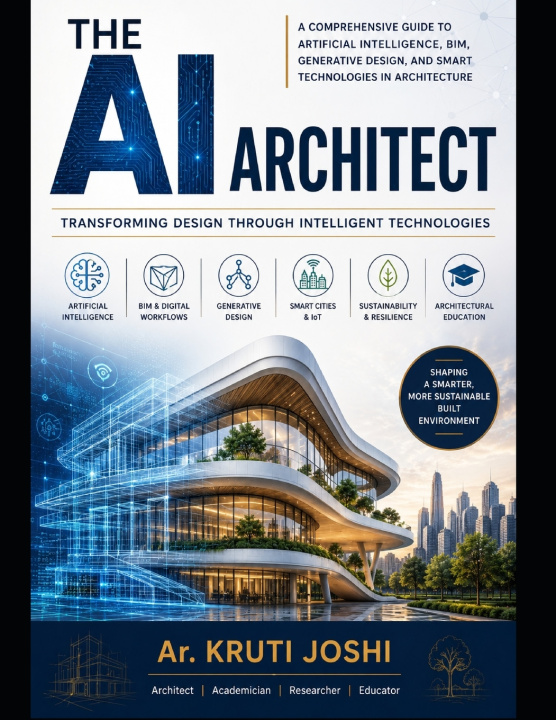
Architecture has always evolved alongside technological progress. From the invention of drawing instruments to computer-aided design and Building Information Modeling (BIM), each advancement has transformed the way architects think, communicate, and create.
Today, Artificial Intelligence represents the next major milestone in this evolution.
Rather than replacing architects, AI offers an unprecedented opportunity to augment creativity, automate repetitive tasks, analyze complex datasets, and support more sustainable and informed decision-making. Yet its rapid emergence has also created uncertainty. Students wonder how AI will affect their careers, practitioners seek practical implementation strategies, and educators strive to integrate these technologies responsibly into architectural curriculum.
This book was written to address those questions