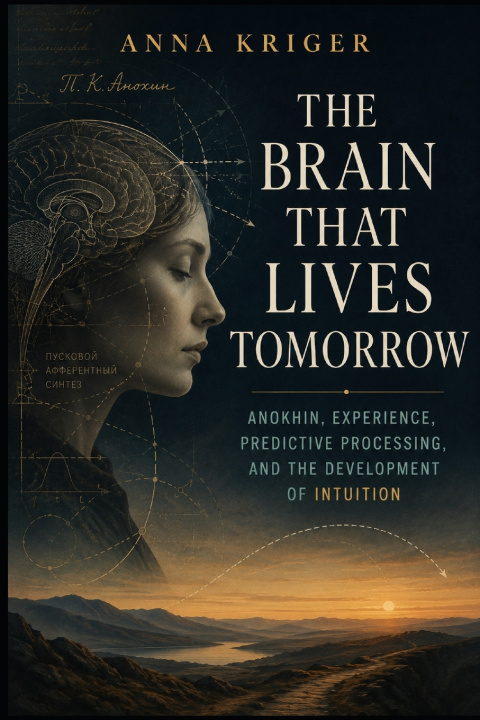
A surgeon glances at a patient and says, before any test comes back, that something is wrong. A negotiator hears one sentence and knows the deal is dead. A mother wakes a moment before her child cries. We call this intuition, and we treat it as a small miracle, a whisper from somewhere beyond reason.
It is nothing of the kind. It is the most ordinary thing the brain does, running faster than words. The brain is not built to store the past. It is built to bet on the future, to guess what happens next and ready the body before the event arrives. Intuition is that guess reaching us before its reasons do.
Long before Western science gave this idea equations, a Russian physiologist named Pyotr Anokhin had already drawn the machinery: a brain that builds a model of the result it expects, acts, and then checks reality against its own forecast. He was persecuted for thinking too freely, published mostly in a language the wider world did not read, and was largely forgotten. The West arrived at the same door decades later and knocked as though no one had ever lived there.
This book tells both stories, and it does something more useful than admire a mystery. It shows that intuition can be trusted, doubted, tested, and trained; that the body speaks first for a reason; that trauma can make the past impersonate a warning; and that experience becomes wisdom only when reality is allowed to correct it. A forecast is not a verdict. The mature mind listens to its predictions and still asks them to prove it.
KEYWORDS
intuition · prediction · Anokhin · predictive brain · feedback · expertise · the body