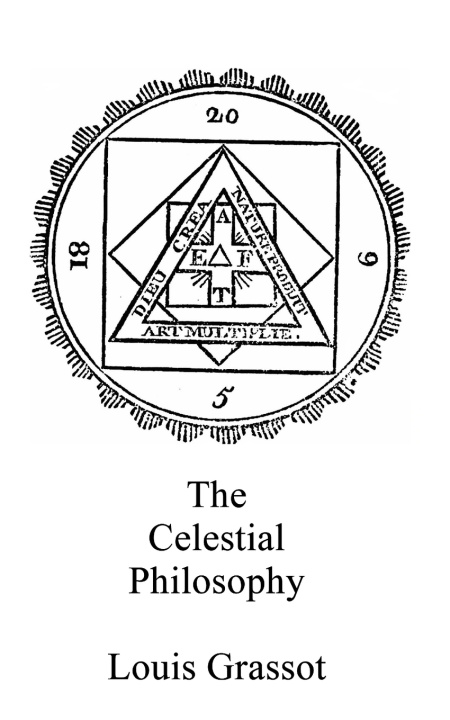
This text from 1803, attributed to L. Grassot, presents a Christian-Hermetic philosophy of God, nature, humanity, and alchemy. Its opening claim is that all knowledge must begin with the first principle: eternal divine Unity, identified with the Word of God. All visible and invisible beings flow from this Unity, just as numbers flow from one and geometrical figures from a point. Nature's diversity therefore does not contradict its single source; it manifests that source through graduated forms.
The first part centres on Man as the Microcosm. Because Man is made in the image of the Word, he contains intellectual, celestial, and elemental natures, summarising the whole Macrocosm. The soul receives God directly, acts upon the spirit, and through the spirit governs the body. Human temperament, friendship, enmity, intelligence, and bodily formation are explained through celestial and planetary influences, though the soul itself remains divine. Mortality is traced to the Fall: Man left a pure incorruptible state and entered a corruptible elemental realm. Death, however, can become liberation, separating the essential Man from corrupt matter and allowing return to God.
The second part explains the structure of creation. God creates through number, weight, measure, proportion, and gradation. Substance is the first created principle; from it come the elements, then generative "slime" or seed, then individual beings. Art imitates Nature, and Nature imitates the Creator. Natural things are not accidental but substantial transformations of one underlying substance. Proportion and difference allow elements to unite harmoniously. The incarnate Word becomes the necessary mediator between fallen Man and God, enabling resurrection, transmutation, and the return of all creatures to Unity through Man.
The third part opens "true natural philosophy," defending the Great Work of Hermetic alchemy. All sublunary things are composed of qualities and reduced to three principles: Sulphur, Salt, and Mercury. Nature alone is limited by impurity, insufficient heat, and imperfect mixtures, but Art can assist Nature through purification, distillation, calcination, fermentation, and controlled fire. The perfected Elixir or universal medicine is said to heal bodies, perfect plants, transmute metals into gold, and symbolically mirror Christ's redemptive work. Overall, the text fuses theology, cosmology, anthropology, and alchemy into one vision of universal restoration.