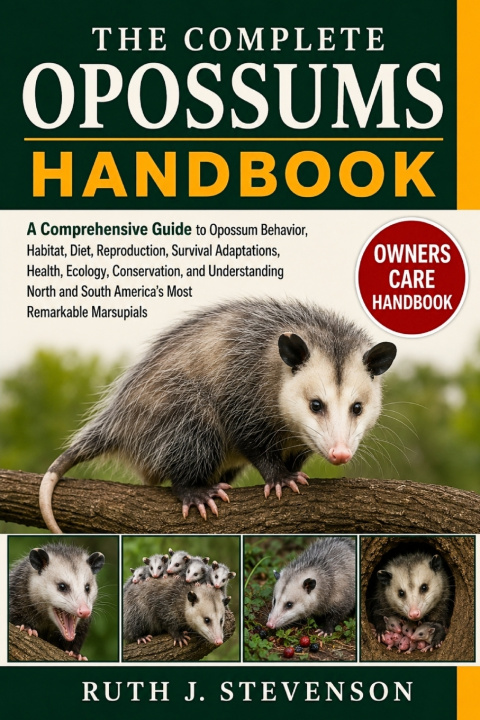
Getting to Know Opossums
Introduction to Opossums
Opossums are among the most fascinating and misunderstood mammals in the Americas. Known for their unique appearance, remarkable survival abilities, and important ecological contributions, these animals have successfully adapted to a wide variety of environments ranging from dense forests to suburban neighborhoods. Opossums belong to a group of mammals known as marsupials, which are characterized by giving birth to highly underdeveloped young that continue their development while attached to their mother's nipples, often within a protective pouch. This reproductive strategy distinguishes them from most other mammals and has contributed to their scientific significance.
The Virginia Opossum is the species most familiar to people in North America, although many other opossum species exist throughout Central and South America. These animals are easily recognized by their pointed faces, hairless ears, long prehensile tails, and opposable thumbs on their hind feet. While their appearance may seem unusual, every aspect of their anatomy has evolved to support survival in diverse habitats. Their ability to climb, forage, and adapt to changing environmental conditions has enabled them to persist for millions of years.
Opossums are primarily nocturnal, spending much of the daylight hours resting in sheltered locations before becoming active after sunset. During the night, they search for food, explore their surroundings, and carry out most of their daily activities. Their omnivorous diet allows them to consume a wide variety of foods, including fruits, insects, small animals, carrion, and plant materials. This dietary flexibility contributes significantly to their ability to thrive in both natural and human-altered landscapes.
Despite their widespread distribution and ecological importance, opossums are often misunderstood. Many people mistakenly view them as pests or dangerous animals, when in reality they are generally shy, non-aggressive creatures that provide numerous environmental benefits. Understanding their biology, behavior, and ecological role helps reveal why opossums deserve appreciation and protection as valuable members of the ecosystems they inhabit.
History and Evolution of the Species
The evolutionary history of opossums stretches back tens of millions of years, making them among the oldest surviving groups of marsupials. Their ancestors appeared long before many modern mammal groups evolved and successfully adapted to changing environmental conditions throughout geological history. Fossil evidence suggests that early marsupials originated during a period when continents were arranged very differently from their current positions, allowing ancient relatives of opossums to spread across large geographic areas.
Over time, evolutionary processes shaped the distinctive characteristics that define modern opossums. Features such as the prehensile tail, opposable hind thumb, specialized reproductive system, and adaptable feeding habits emerged as advantageous traits that improved survival. These adaptations enabled opossums to exploit a wide variety of ecological niches and successfully navigate changing environments. Their evolutionary success demonstrates remarkable resilience in the face of environmental challenges that caused the extinction of many other animal groups.
As continents shifted and climates changed, opossums diversified into numerous species occupying different habitats throughout the Americas.