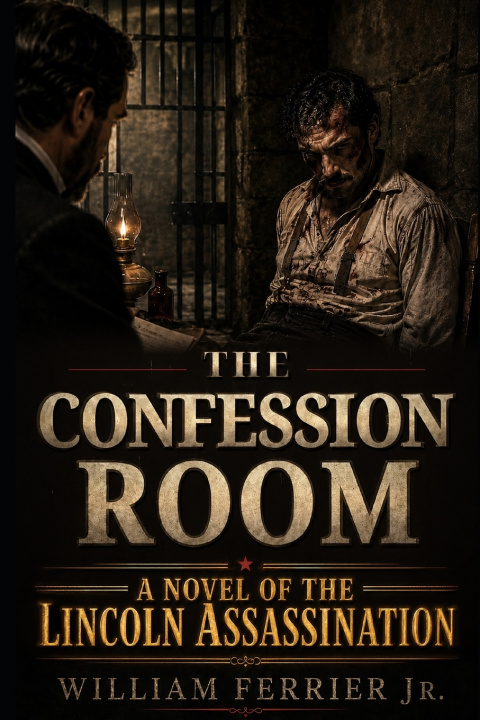
John Wilkes Booth did not die in a burning barn. That is the history we were given.
This is the history that was sealed.
For eleven days after Ford's Theatre, the man the entire country believes is still at large is locked in an unmarked room beneath the Washington Arsenal, his shattered leg splinted by the one man permitted to see him: Calvin Morrow, a physician recruited not to heal Booth but to read him - to extract, through ten quiet sessions, whatever truth can be gotten from a man who has spent his whole life performing for an audience.
What Morrow doesn't know when he takes the case is how much of himself the room will cost him. Booth is not a madman to be diagnosed. He is a trained actor, watching Morrow as closely as Morrow watches him, offering confession, performance, and something that might be honesty in proportions Morrow can't always tell apart - while upstairs, a colonel who answers to no one is deciding what the country will be allowed to know, and what will simply disappear into a file no one is meant to open.
The Eleven Days is not a manhunt. It is a reckoning conducted at close range - a novel about the stories nations choose over the truth, and the smaller, more dangerous question of what it costs one man to sit across from evil and refuse to look away.
For readers who want their historical fiction slow-built and psychologically exact - in the tradition of The Alienist, The Dante Club, and le Carré's quieter novels - this is a story about what happens after the shot, in the room history never wrote down.