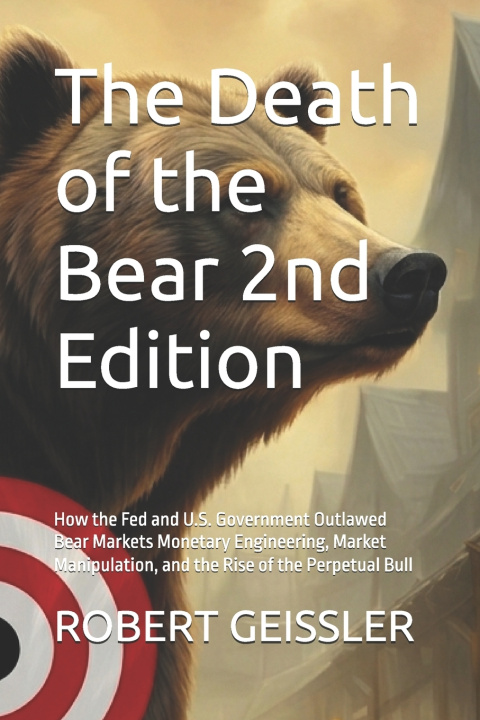
What if the greatest threat to capitalism isn't a crash - it's the refusal to let one happen?
For over a decade, the Federal Reserve and the U.S. government have treated every market decline as an emergency to be extinguished rather than a truth to be told. Bailouts became policy. Stimulus became reflex. And the bear market - capitalism's own mechanism for correcting its mistakes - was quietly legislated out of existence.
In this fully updated second edition, Robert F. Geissler traces the machinery of that suppression from the 2008 financial crisis through the COVID-era bailouts, and into six entirely new chapters covering the moment this book's original warning started coming true: the Fed's 2025 return to balance-sheet expansion under the label "reserve management," a new Fed chairman whose tenure hasn't yet changed the pattern, a record $1.2 trillion in corporate buybacks propping up the market from the private side, and a private credit system quietly replicating the same risks that broke the financial system in 2008.
Suppressing risk doesn't eliminate it. It builds pressure. And this book asks the question Wall Street would rather you not think too hard about: what happens when the bear finally comes back?
For readers of Nassim Taleb, Ray Dalio, and Ludwig von Mises - this is the essential, unflinching account of a market that has forgotten how to fall, and what that forgetting is going to cost.