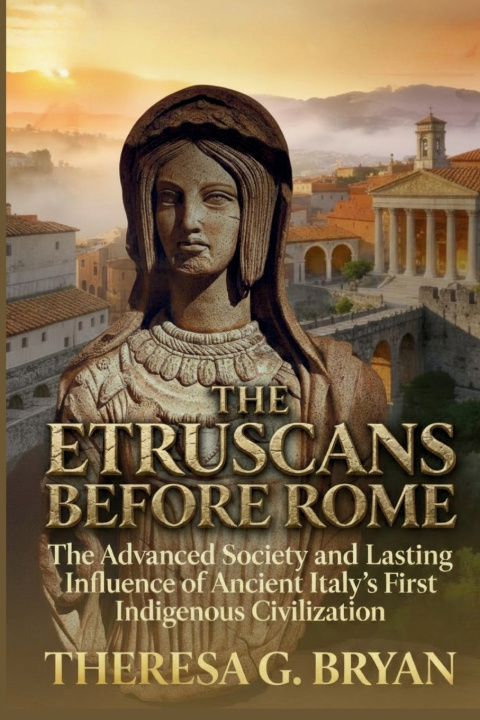
Before Rome built an empire, who built Rome?
The answer lies buried beneath centuries of conquest, in a civilization most people have never heard of.
The Etruscans ruled central Italy when Rome was just a village. Their kings sat on thrones in the city that would eventually dominate the world. They engineered drainage systems still functioning after 2,600 years. They wielded the fasces-bundles of rods and axes-that became history's most enduring symbol of political authority. They adapted the Greek alphabet into a form that the Romans would spread across three continents, evolving into the letters you're reading now.
Then Rome turned on its teachers.
This is the five-hundred-year story of masters becoming subjects, conquerors becoming conquered, and an entire language dying into silence. From the Etruscan kings who transformed Rome in the 6th century BCE through brutal centuries of warfare to the moment around 100 CE when the last person who could speak Etruscan drew their final breath, you'll witness every stage of this transformation.
What you're about to discover will change how you see the rise of Rome. The ten-year siege of Veii ended with total destruction. The catastrophic defeat at Lake Vadimo, as ancient historians claimed, "broke the power of the Etruscans." The desperate alliance at Sentinum, where forty thousand warriors clashed in Italy's largest battle. The systematic absorption of Etruscan cities one by one until political independence became a memory.
Few people know that Emperor Claudius learned Etruscan and wrote twenty volumes on their civilization-all of which are now lost. That haruspicy, the Etruscan practice of reading animal organs to divine the future, continued in Roman temples for four centuries after the Etruscan language died. The Cloaca Maxima, commissioned by Etruscan kings in 600 BCE, remains part of Rome's infrastructure today. That nearly every Roman political institution had Etruscan origins.
This deeply researched narrative reveals how military conquest becomes political subordination, cultural assimilation, and extinction. How trade relationships, intermarriage, citizenship grants, and language shift transformed Etruscans into Romans within three generations. How an advanced civilization with sophisticated cities, remarkable engineering, and rich culture could be so thoroughly absorbed that most people today don't even recognize their name.
Perfect for history enthusiasts, students of classical civilization, and anyone fascinated by how empires truly rise and how cultures survive-or don't. Whether you're drawn to ancient military campaigns, archaeological mysteries, or the complex dynamics of cultural identity, this book illuminates the civilization that made Rome possible.
The Etruscans built Rome. Then, Rome erased their name from the story.
Ready to discover ancient Italy's first great civilization? Grab your copy now.