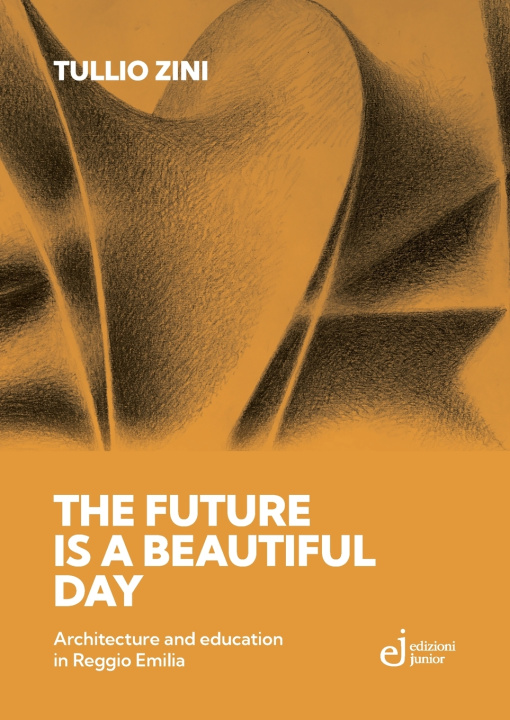
Working alongside Loris Malaguzzi since the 1960s, Tullio Zini played a pivotal role in founding the Reggio Emilia educational system, which has since gained world renown. Through landmark projects such as the Diana School, the Nido Nilde Iotti, and the Loris Malaguzzi International Center, Zini has designed spaces rooted in a pedagogy that recognizes the child as a competent, creative, and active protagonist. In this volume, Zini starts from the premise that space is never a neutral container; it is a "silent educator" that, through the interplay of light, proportions, materials, and geometry, shapes a child's cognitive and emotional journey. He asserts that beautiful, welcoming, and stimulating environments are not a luxury, but a fundamental right of every child. The Future is a Beautiful Day addresses concrete challenges: fostering effective dialogue between architects and educators, applying neuroscience and spatial empathy to design, and articulating "soft qualities"-such as light, color, and acoustics-while navigating real-world constraints like bureaucracy, costs, and sustainability. Ultimately, the author redefines the bond between the building and the local context: the school must not be an island, but a Civic Centre. It is an urban hub capable of reweaving the social fabric of the community-offering libraries, auditoriums, and gyms-to create a place where every student, young and old, can finally feel "welcomed and loved".