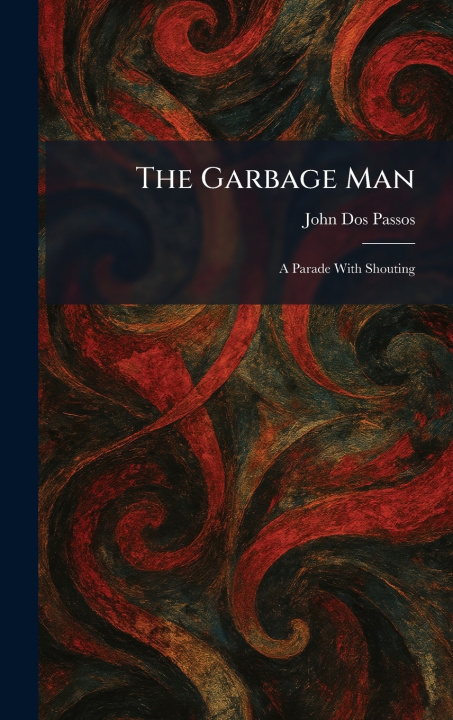
"The Garbage Man a Parade With Shouting" is a vibrant and experimental expressionist play by the renowned American writer John Dos Passos. Set against the frantic backdrop of New York City, the play captures the chaotic pulse of urban existence during the Jazz Age. The narrative follows the journey of two young lovers, Tom and Jane, as they navigate a landscape filled with symbolic figures, social disillusionment, and the looming presence of the titular Garbage Man-a haunting personification of death and the inevitable disposal of human ambition.
Characterized by its rhythmic dialogue, jazz-influenced structure, and avant-garde staging, the work serves as a sharp critique of industrial society and the crushing weight of modern materialism. Dos Passos utilizes theatrical "parades" and choral shouting to evoke the sensory overload of the city, successfully blending social realism with hallucinatory imagery. As one of the author's early ventures into theatre, "The Garbage Man a Parade With Shouting" remains a significant example of 1920s experimental drama, reflecting the restlessness and creative ferment of the Lost Generation. It is a vital work for those interested in the evolution of American literary modernism and the history of the avant-garde stage.
This work has been selected by scholars as being culturally important, and is part of the knowledge base of civilization as we know it. This work was reproduced from the original artifact, and remains as true to the original work as possible. Therefore, you may see the original copyright references, library stamps (as most of these works have been housed in our most important libraries around the world), and other notations in the work.
This work is in the public domain in the United States of America, and possibly other nations. Within the United States, you may freely copy and distribute this work, as no entity (individual or corporate) has a copyright on the body of the work.
As a reproduction of a historical artifact, this work may contain missing or blurred pages, poor pictures, errant marks, etc. Scholars believe, and we concur, that this work is important enough to be preserved, reproduced, and made generally available to the public. We appreciate your support of the preservation process, and thank you for being an important part of keeping this knowledge alive and relevant.